Mold Detox Binders Explained: Charcoal, Cholestyramine, Clay, and Which Mycotoxins They Bind
What the research tells us about different binders, why one binder doesn't work for every toxin, and what you should understand before starting.
By Dr. Gail Clayton, DCN, CNS, MS, RPh, LDN, and Dr. Margaret Christensen, MD
Imagine that you've discovered mold in your home. You've been dealing with fatigue, brain fog, headaches, digestive issues, and a growing list of symptoms that don't seem connected.
After researching mold-related illness, you repeatedly encounter one word: binders.
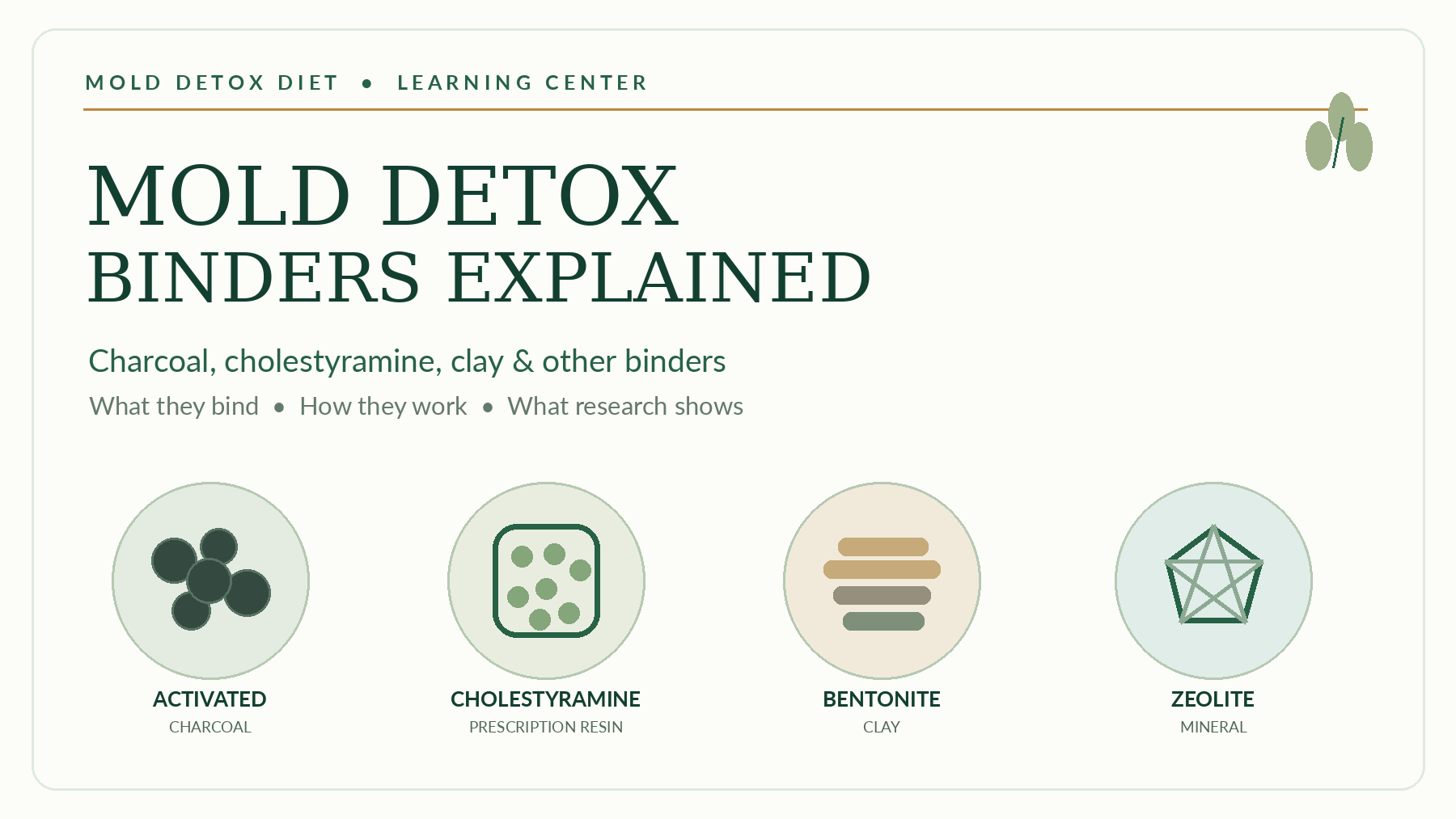
Activated charcoal. Cholestyramine. Bentonite clay. Zeolite. Chlorella.
You read about people who swear by one product, while someone else insists another works better. You may even find charts claiming that particular binders remove specific mycotoxins.
But there's an important question that often gets overlooked:
How do we actually know which binder works for which toxin?
The answer is more complicated—and more interesting—than most supplement descriptions suggest.
Some binding agents have been studied for decades. Others have demonstrated interesting effects in laboratory experiments or animal studies. Still others have promising mechanisms but limited evidence showing that they improve outcomes in people experiencing symptoms after mold exposure.
Understanding those differences can help you become a more informed participant in your healthcare without assuming that every binder works the same way.
1. What exactly is a binder?
A binder is a substance that can attach to other substances within the gastrointestinal tract.
Many binders work through a process called adsorption.
Adsorption is different from absorption.
When you absorb something, it enters another material—like water soaking into a sponge.
During adsorption, molecules attach to a surface.
Consider activated charcoal. Its extremely porous structure provides a large surface area where certain molecules can attach.
When a compound is bound within the gut, some of it may become less available for absorption or reabsorption and may instead leave the body through stool.
This is why binders have attracted interest in environmental toxicology and mold-related illness.
But there is a crucial distinction:
A substance that binds a mycotoxin in a laboratory does not automatically remove that mycotoxin from human tissues or improve mold-related symptoms.
The gastrointestinal tract is much more complicated than a laboratory container. Food, bile acids, digestive enzymes, medications, intestinal pH, and many other substances can influence what a binder attaches to.
The recycling problem: Enterohepatic circulation
One reason certain binders have attracted attention is the concept of enterohepatic circulation.
The liver produces bile, which helps digest and absorb fats. Bile also carries certain substances into the intestine.
Normally, much of the body's bile-acid supply is reabsorbed and returned to the liver.
This recycling process is efficient, but it raises an interesting possibility: if a compound enters bile and is released into the intestine, could a binder reduce its reabsorption and increase its elimination?
For some chemicals, there is evidence supporting this strategy.
For individual mycotoxins, however, the extent of biliary excretion, intestinal reabsorption, and benefit from oral binders varies and is not always established in humans.
That is why a binder's mechanism matters just as much as its name.
2. Are all mold toxins the same?
Not at all.
The word mycotoxin describes a broad collection of compounds produced by certain fungi.
These compounds differ in their molecular structures, chemical properties, toxicological effects, and potential interactions with binding agents.
Some of the most frequently discussed include:
Aflatoxins: Commonly associated with certain Aspergillus species and important in contaminated-food toxicology.
Ochratoxin A: Produced by certain Aspergillus and Penicillium species and extensively studied for its effects on the kidneys.
Zearalenone: A Fusarium mycotoxin known for estrogenic activity.
Trichothecenes: A broad group that includes deoxynivalenol (DON) and T-2 toxin.
Fumonisins: Produced mainly by certain Fusarium species, especially in contaminated grain.
Gliotoxin: A fungal metabolite studied for immunological and other biological effects.
The important point is that a binder may interact strongly with one compound and weakly with another.
A study showing that activated charcoal binds aflatoxin does not establish that it will bind gliotoxin, for example.
Similarly, a study involving a toxin in contaminated animal feed cannot be assumed to predict what happens after inhalational exposure in a damp building.
Those are different exposure settings with different questions to answer.
3. Prescription binders: Cholestyramine and colesevelam
Cholestyramine: A bile-acid sequestrant with a long history
Cholestyramine is a prescription medication primarily used to lower certain cholesterol levels and treat specific conditions involving bile acids.
It is a resin that binds bile acids in the intestine.
By preventing some bile acids from being reabsorbed, it increases their elimination in stool.
Cholestyramine has also been investigated as a binding agent for certain environmental contaminants and mycotoxins.
For example, experimental research involving ochratoxin A has examined whether cholestyramine can increase its fecal elimination and reduce toxic effects.[5]
Research has also considered interactions involving zearalenone and fumonisins.[13,14]
Some clinicians have used cholestyramine in treatment approaches for patients with suspected biotoxin-associated illness, including illness associated with water-damaged buildings.[12]
However, use for mold-related illness is not an FDA-approved indication, and the available research does not establish cholestyramine as an effective treatment for every person reporting symptoms after mold exposure.
What makes cholestyramine different?
Its primary established action is bile-acid sequestration. It is not simply interchangeable with activated charcoal, clay, or fiber.
It may be particularly relevant when investigating compounds that participate in intestinal or biliary handling, but the benefit must be evaluated for the specific substance and clinical situation.
What about Welchol (colesevelam)?
Colesevelam, marketed as Welchol, is another prescription bile-acid sequestrant.
Like cholestyramine, it binds bile acids within the gastrointestinal tract.
It is sometimes discussed as an alternative because its formulation and tolerability may be preferable for certain patients.
But a major evidence distinction matters here.
The fact that colesevelam and cholestyramine both bind bile acids does not prove that they have identical binding affinities for every mycotoxin.
They have related mechanisms, but their chemical structures and binding characteristics are not identical.
We should not assume that a study demonstrating toxin binding by cholestyramine automatically proves equivalent effects from colesevelam.
Important safety considerations
Prescription bile-acid sequestrants can cause constipation, bloating, abdominal discomfort, and interactions with other oral medications.
Cholestyramine can interfere with the absorption of certain medications and fat-soluble vitamins. Timing and monitoring may be important.
People with significant gastrointestinal disease, bowel obstruction, or other medical conditions need individualized assessment before using these agents.
These medications should be used under qualified medical supervision rather than as unsupervised detox products.
4. Activated charcoal: A versatile but nonspecific binder
Activated charcoal is probably the best-known nonprescription binder.
Its use in certain acute poisonings is well established, although even in emergency medicine it is not appropriate for every substance or every situation.
Activated charcoal is produced through processing that creates an extensive network of pores.
This gives it a large surface area, allowing various molecules to adhere to its surface.
Which mycotoxins has charcoal been studied for?
Experimental studies have examined charcoal's ability to adsorb several mycotoxins, including aflatoxins, ochratoxin A, zearalenone, fumonisins, and deoxynivalenol.
One particularly interesting finding comes from comparative studies of different binding agents.
In a 2014 laboratory study by Kong and colleagues, activated charcoal demonstrated strong adsorption of aflatoxin under the experimental conditions. Its adsorption of deoxynivalenol was substantially lower.[3]
This illustrates why binder selection cannot be based simply on the assumption that charcoal binds everything.
Its effectiveness depends on the chemical structure of the target compound, the charcoal formulation, and the environment in which binding occurs.
Why charcoal deserves caution
Activated charcoal is not selective for substances that people consider harmful.
It can also interfere with the absorption of certain medications and other compounds taken orally.
Possible adverse effects include constipation, nausea, and abdominal discomfort. Aspiration into the lungs is a serious potential complication, particularly in people with impaired swallowing or reduced consciousness.
And although charcoal can adsorb some mycotoxins in experimental systems, high-quality clinical trials demonstrating that routine charcoal supplementation improves health outcomes after indoor mold exposure are lacking.
Charcoal should therefore not be viewed as a harmless supplement that everyone with suspected mold illness needs.
5. Bentonite clay: Why the type of clay matters
Bentonite is a natural clay containing minerals such as montmorillonite.
Certain clay minerals have surface charges and structural characteristics that allow them to adsorb specific molecules.
They have been extensively investigated in agriculture and food safety, particularly for reducing the bioavailability of aflatoxins in contaminated animal feed.
Some of the strongest research involves aflatoxin
Aflatoxin-binding research is one of the better-developed areas of the binder literature.
Studies involving particular processed clay formulations have demonstrated reductions in certain biomarkers of aflatoxin exposure.[10,11]
This does not mean that all bentonite products work equally well.
Clay composition, purification, particle size, and manufacturing quality can influence performance.
It also does not mean that evidence involving aflatoxin-contaminated food proves efficacy for other mycotoxins acquired through inhalation.
Does clay bind ochratoxin or zearalenone?
Some laboratory and animal studies suggest that certain clays can adsorb additional mycotoxins.
But the results vary.
For example, a clay formulation might bind aflatoxin strongly while exhibiting relatively poor adsorption of deoxynivalenol.
This is one reason simple marketing claims such as "broad-spectrum binder" may be misleading.
The specific clay preparation matters, and so does the toxin being studied.
What should patients know about clay safety?
Natural clay products can vary in quality and may contain unwanted contaminants, including toxic metals.
Some preparations can cause constipation, and certain clays may interact with medications or nutrients.
A product advertised as natural is not necessarily appropriate for regular internal use.
Quality verification and professional assessment matter.
6. Zeolite: Promising chemistry, unanswered clinical questions
Zeolites are crystalline aluminosilicate minerals with porous structures capable of exchanging certain ions and interacting with molecules.
One commonly discussed form is clinoptilolite.
Zeolites have been studied in environmental applications, agriculture, animal nutrition, and selected biomedical settings.[9]
Their binding characteristics make them interesting candidates for research involving mycotoxins.
Some experimental studies have examined binding of aflatoxin, ochratoxin, T-2 toxin, and zearalenone.
Other research has investigated interactions involving heavy metals and biologically active amines.
However, many published results involve water purification, food, or animal models—not treatment of people with mold-related illness.
An important question: Where does the binding occur?
A zeolite that removes a compound from contaminated water has demonstrated a chemical property.
But that does not establish that taking the same substance orally removes a toxin already stored in human tissues.
Those are different processes.
The available evidence is insufficient to conclude that zeolite supplements reliably treat chronic symptoms attributed to indoor mold exposure.
Product purity, particle characteristics, potential contaminants, and interactions with other substances also deserve consideration.
7. Chitosan: A different kind of binding material
Chitosan is a polysaccharide generally derived from chitin, a structural material found in sources such as crustacean shells and fungal cell walls.
Its chemical characteristics make it useful in biomedical materials, food technology, and adsorption research.
Chitosan has been investigated for its interactions with fats, certain environmental compounds, and several mycotoxins.
Laboratory studies have examined its ability to bind or remove substances such as aflatoxins, ochratoxin A, zearalenone, and fumonisins.
But chitosan is not one uniform ingredient.
Its molecular weight, degree of deacetylation, and preparation can influence its behavior.
A study of a modified chitosan material used to remove toxins from food cannot automatically establish that ordinary oral chitosan supplements have the same effectiveness.
Chitosan may also interfere with the absorption of other substances. Product source and potential allergies should be considered.
The clinical evidence supporting its use specifically for mold-related illness remains limited.
8. Glucomannan, chlorella, and other nonprescription options
Glucomannan
Glucomannan is a soluble dietary fiber obtained from the konjac plant.
It can absorb water and form a viscous gel within the gastrointestinal tract.
Modified glucomannan preparations have been studied as mycotoxin-binding ingredients in animal feed.
Some studies have examined their interactions with aflatoxin, ochratoxin, T-2 toxin, and zearalenone.
But the effects of a specially processed feed additive should not be assumed to apply to every glucomannan supplement marketed for human use.
Glucomannan also has other gastrointestinal effects unrelated to mycotoxin binding, including effects on stool consistency and intestinal contents.
Because it swells with water, inadequate fluid intake or swallowing difficulties can create safety concerns.
Chlorella and chlorophyll
Chlorella is a freshwater green alga. Chlorophyll is a pigment found in green plants, while chlorophyllin is a water-soluble derivative used in some research.
These substances are often grouped together in detoxification discussions, but they are not identical.
One especially interesting line of human research involves chlorophyllin and aflatoxin exposure.
A randomized trial published by Egner and colleagues in 2001 found reductions in a urinary biomarker of aflatoxin-related DNA damage among people at elevated dietary exposure risk.[6]
This supports further interest in compounds that can influence aflatoxin handling.
However, it does not establish that chlorella products remove all mycotoxins or that they treat illness related to water-damaged buildings.
A study showing changes in a biomarker also does not necessarily demonstrate improvement in symptoms or long-term clinical outcomes.
Humic acid and modified citrus pectin
Humic substances and modified citrus pectin are sometimes included in broad discussions of binding agents.
Research involving humic acid includes adsorption experiments and animal studies.
Modified citrus pectin has been investigated in relation to certain metals and biological signaling pathways.
However, their proposed uses should not be treated as interchangeable with the gastrointestinal binding properties of charcoal or prescription bile-acid sequestrants.
The mechanisms differ, and evidence for treating mold-related illness remains limited.
9. Which binders bind which mycotoxins?
This is probably the question most readers have been waiting for.
The ISEAI research compilation contains extensive comparison tables, including studies involving activated charcoal, cholestyramine, clay, glucomannan, yeast-derived materials, and other agents.[1]
But a responsible comparison chart needs to show more than a check mark.
A check mark means little unless we understand where the binding was demonstrated.
Was it in a laboratory solution? An animal-feed experiment? A human exposure study? Or a trial that actually measured improvement in patients?
Those differences are crucial.
What the research suggests
| Mycotoxin | Agents with relevant experimental research | Important qualification |
|---|---|---|
| Aflatoxins | Certain clays, activated charcoal, yeast-derived binders, chlorophyllin | Stronger evidence exists in food/feed studies; selected human exposure-biomarker studies are available |
| Ochratoxin A | Cholestyramine, activated charcoal, selected clays, chitosan, glucomannan | Much of the direct binding evidence is laboratory or animal-based |
| Zearalenone | Cholestyramine, charcoal, selected clays, chitosan, yeast-derived agents | Adsorption varies considerably by formulation and experimental conditions |
| Fumonisins | Activated charcoal, certain clays, cholestyramine, chitosan | Evidence is largely from food/feed and experimental toxicology |
| Deoxynivalenol (DON) | Activated charcoal, selected modified binders and yeast-derived preparations | Often more difficult to bind consistently; results vary substantially |
| T-2 / HT-2 toxins | Selected clays, glucomannan-derived materials, chitosan preparations | Human clinical efficacy remains uncertain |
| Gliotoxin | Insufficient direct comparative evidence | Cannot reliably recommend a specific binder from these source documents |
| Enniatin B | Insufficient direct comparative evidence | Cannot reliably recommend a specific binder from these source documents |
| Citrinin | Limited exploratory evidence involving selected preparations | No established oral binder protocol for human mold-related illness |
Research overview, not a clinical treatment chart. Listed agents have been investigated under varying conditions; inclusion does not establish that an oral product treats human mold-related illness.
Why the numbers can be misleading
Consider two studies summarized in the ISEAI research compilation.
In one laboratory comparison, charcoal adsorbed essentially all the aflatoxin measured under the study conditions, while demonstrating much lower adsorption of deoxynivalenol.[3]
Another comparison found substantial differences between individual clays and other preparations.[2,4]
It would be tempting to transform these numbers into statements such as "charcoal removes 100% of aflatoxin."
But that would misrepresent the research.
A percentage measured in a laboratory experiment is not the percentage of a toxin that will be removed from a person's body.
The concentrations, pH, binding conditions, competing substances, and formulations may all differ.
And adsorption in a laboratory is not the same outcome as reduced absorption, increased elimination, lower toxin burden, or improvement in symptoms.
That is why the best binder comparison charts provide context rather than promising certainty.
10. Can food act as a natural binder?
This is one of the most interesting and practical areas of the research.
While prescription and supplemental binders receive considerable attention, dietary fiber and certain plant compounds also interact with substances in the gastrointestinal tract.
The ISEAI research compilation includes studies examining the bile-acid binding capacity of vegetables.
Among the foods studied were okra, beets, asparagus, eggplant, green beans, carrots, and cauliflower.[7,8]
Researchers also examined whether cooking methods changed the measured binding capacity.
In some experiments, steam cooking substantially increased the bile-acid binding properties of certain vegetables.[7]
For example, in laboratory testing using equal dry weights, steamed beets demonstrated bile-acid binding equivalent to approximately 18% of the amount measured with cholestyramine.[7]
That sounds remarkable.
But we must understand exactly what it means.
Bile-acid binding is not the same as mycotoxin binding
These vegetable studies measured interactions with bile acids under laboratory conditions.
They did not establish that eating steamed beets removes 18% as much ochratoxin as cholestyramine would remove from a human patient.
Nor did they demonstrate that a particular vegetable cures mold-related illness.
Still, the findings contribute to our understanding of how diet can influence intestinal chemistry and bile-acid handling.
Why nutrition remains important
Dietary fiber can support regular bowel movements, help maintain a healthy intestinal environment, and influence bile-acid metabolism.
A varied, nutrient-dense diet also provides essential nutrients needed for normal metabolic processes.
This is one reason we emphasize nutrition as a foundation of overall health rather than viewing recovery as a question of choosing the strongest detox supplement.
But adding fiber or vegetables should not be presented as an equivalent substitute for prescription therapy when that therapy is medically indicated.
11. Why do some people feel worse when taking binders?
People sometimes report constipation, nausea, abdominal discomfort, bloating, or changes in bowel habits after beginning a binding agent.
Some interpret every unpleasant reaction as evidence that toxins are being released or removed.
That interpretation deserves caution.
Feeling worse after taking a binder does not prove that detoxification is occurring.
There may be more straightforward explanations.
For example, the binder may contribute to constipation, aggravate existing gastrointestinal symptoms, alter absorption of a medication, or simply be poorly tolerated.
People with complex chronic health concerns may also be taking multiple medications and supplements, increasing the potential for interactions.
Constipation is especially important
Many binding agents are intended to remain in the gastrointestinal tract and eventually pass through the stool.
If they contribute to significant constipation, continuing or escalating them without assessment may make symptoms worse.
Severe abdominal pain, vomiting, inability to pass stool or gas, or other signs of obstruction require prompt medical evaluation.
Nutrient and medication interactions
Because binding agents can attach to substances in the intestine, they may interfere with medications or nutrients.
The extent of that interaction differs among products.
Prescription bile-acid sequestrants have well-described medication-interaction and absorption precautions.
Activated charcoal is also capable of reducing the absorption of many orally administered medicines.
Certain fibers and mineral materials may influence absorption depending on the formulation and circumstances.
For these reasons, a person should not assume that taking more binders—or combining several—will produce better results.
12. Can several binders be combined?
You may encounter protocols that recommend multiple binders at once, based on the idea that one product will capture toxins another product misses.
The underlying concept is understandable because different materials have different chemical properties.
However, chemical complementarity does not prove clinical benefit from a combination regimen.
There are relatively few high-quality human studies establishing which oral binder combinations, if any, improve outcomes specifically in mold-related illness.
Combining products also increases complexity.
Potential concerns include constipation, unintended medication interactions, nutrient absorption issues, and difficulty identifying which ingredient is causing an adverse effect.
An evidence-informed approach considers the actual clinical need, expected benefit, existing medications, contraindications, and available evidence rather than automatically adding more products.
13. Why binders aren't the whole answer to mold-related illness
Binders are frequently discussed in relation to environmental illness, but they address only one potential part of a much larger picture.
For someone concerned about exposure in a damp or water-damaged building, identifying and addressing the environmental source is fundamental.
That may involve investigating moisture intrusion, appropriate remediation, improving indoor conditions, or avoiding ongoing exposure when necessary.
Persistent symptoms also deserve a careful medical assessment.
Fatigue, cognitive changes, headaches, digestive problems, dizziness, and other symptoms can arise from many conditions, some of which require specific treatment.
A diagnosis should not be based solely on symptoms or an assumption that a particular mycotoxin is responsible.
This is where a broader understanding of health becomes valuable.
The gut matters
Normal digestion, gastrointestinal function, bowel habits, and nutritional adequacy all contribute to health.
If someone is experiencing significant gastrointestinal symptoms, those concerns deserve attention in their own right.
Cellular and immune function matter
Normal energy metabolism, antioxidant defenses, and immune regulation depend on complex biological systems.
Supporting general nutritional adequacy is important, but no individual binder should be assumed to correct all of these processes.
The environment matters
An oral binder cannot repair a leaking roof, remove hidden moisture, or correct a contaminated ventilation system.
Environmental assessment and source control should not be replaced by supplement use.
The individual's medical picture matters
Not everyone with mold exposure has the same health concerns, and not everyone with persistent symptoms has mold-related disease.
Care should reflect the patient's history, exposures, examination, and clinically appropriate investigations.
The goal is not simply to find a stronger binder. It is to understand the larger health picture.
14. Where should you start?
If you're trying to understand whether a binder belongs in your health plan, start with better questions rather than a shopping list.
Ask yourself and your healthcare professional:
Is there a confirmed or suspected exposure that needs environmental attention?
What do we actually know about the substance we're trying to address?
Is the proposed binder supported by human evidence for this specific purpose, or primarily by laboratory and animal studies?
Could it interfere with medications, nutritional status, or existing gastrointestinal conditions?
What meaningful clinical outcome would indicate that the approach is helping?
Are there other medical explanations for symptoms that need investigation?
These questions encourage a more individualized, thoughtful approach.
They also help distinguish measurable evidence from marketing claims and personal testimonials.
15. The bigger lesson: Different binders, different properties, different evidence
The extensive research compiled by ISEAI demonstrates that adsorption is a scientifically meaningful phenomenon.
Certain pharmaceutical resins, carbon preparations, clays, fibers, and biological materials have measurable interactions with specific compounds.
But those findings are not interchangeable.
Aflatoxin binding in contaminated feed is not the same as treating symptoms following exposure to a water-damaged building.
Reducing a urinary biomarker is not necessarily the same as improving a person's health.
And a binding agent that performs well in one laboratory experiment is not automatically the best choice for every patient.
The strongest conclusion is not that everyone needs a binder. It's that the science is more specific—and more nuanced—than most binder marketing suggests.
Understanding those distinctions allows patients and practitioners to evaluate the available evidence more carefully.
That is an important part of becoming an informed health advocate.
Selected research and further reading
These references are drawn from the ISEAI research compilation. The compilation was last updated in April 2022, so it should not be considered a complete review of research published since then.
- Rudd C. The Binder Compendium: Toxin and Toxicant Binding, Excretion, and Mitigation. ISEAI research compilation. Updated April 2022. ISEAI Resources.
- Huwig A, Freimund S, Käppeli O, Dutler H. Mycotoxin detoxication of animal feed by different adsorbents. Toxicology Letters. 2001;122(2):179–188. Read study.
- Kong C, Shin SY, Kim BG. Evaluation of mycotoxin sequestering agents for aflatoxin and deoxynivalenol: an in vitro approach. SpringerPlus. 2014;3:346. Read study.
- Döll S, Dänicke S, Valenta H, Flachowsky G. In vitro studies on the evaluation of mycotoxin detoxifying agents for their efficacy on deoxynivalenol and zearalenone. Archives of Animal Nutrition. 2004;58(4):311–324. Read study.
- Madhyastha MS, Frohlich AA, Marquardt RR. Effect of dietary cholestyramine on the elimination pattern of ochratoxin A in rats. Food and Chemical Toxicology. 1992;30(8):709–714. Read study.
- Egner PA, et al. Chlorophyllin intervention reduces aflatoxin-DNA adducts in individuals at high risk for liver cancer. PNAS. 2001;98:14601–14606. Read study.
- Kahlon TS, Chiu MM, Chapman MH. Steam cooking significantly improves in vitro bile acid binding of beets, eggplant, asparagus, carrots, green beans, and cauliflower. Nutrition Research. 2007;27:750–755. Read study.
- Kahlon TS, Chapman MH, Smith GE. In vitro binding of bile acids by okra, beets, asparagus, eggplant, turnips, green beans, carrots, and cauliflower. Food Chemistry. 2007;103:676–680.
- Kraljević Pavelić S, et al. Critical review on zeolite clinoptilolite safety and medical applications in vivo. Frontiers in Pharmacology. 2018;9:1350. Read review.
- Wang JS, Luo H, Billam M, et al. Short-term safety evaluation of processed calcium montmorillonite clay (NovaSil) in humans. Food Additives and Contaminants. 2005;22(3):270–279. (Phase I safety and tolerability study; it did not test effects on aflatoxin exposure.) Read study.
- Wang P, Afriyie-Gyawu E, Tang Y, Johnson NM, et al. NovaSil clay intervention in Ghanaians at high risk for aflatoxicosis: II. Reduction in biomarkers of aflatoxin exposure in blood and urine. Food Additives & Contaminants: Part A. 2008;25(5):622–634. (Three-month randomized, placebo-controlled trial measuring aflatoxin exposure biomarkers.) Read study.
- Shoemaker RC, House DE. Sick building syndrome (SBS) and exposure to water-damaged buildings: time series study, clinical trial and mechanisms. Neurotoxicology and Teratology. 2006;28(5):573–588. Read study.
- Underhill KL, Rotter BA, Thompson BK, Prelusky DB, Trenholm HL. Effectiveness of cholestyramine in the detoxification of zearalenone as determined in mice. Bulletin of Environmental Contamination and Toxicology. 1995;54(1):128–134. (Animal study.) Read study.
- Solfrizzo M, Visconti A, Avantaggiato G, Torres A, Chulze S. In vitro and in vivo studies to assess the effectiveness of cholestyramine as a binding agent for fumonisins. Mycopathologia. 2001;151(3):147–153. (Laboratory and rat study.) Read study.
Educational disclaimer
This article is provided for educational and informational purposes only. It is not intended to diagnose, treat, cure, or prevent any disease and does not replace individualized medical advice, diagnosis, or treatment. Prescription medications and supplemental binding agents can have contraindications, adverse effects, and interactions. Consult a qualified healthcare professional before using them, particularly if you take prescription medications or have a gastrointestinal or other medical condition.
Continue learning with Mold Detox Diet
If this article has helped you better understand gastrointestinal binders, there's much more to explore.
Learning Center
Explore the Detoxification Learning Center
Learn more about bile flow, enterohepatic circulation, oxidative stress, glutathione, and why mold detoxification involves more than taking a binder.
Courses
Explore our educational courses
Our Mold Detox Diet educational programs take a broader look at nutrition, environmental health, and the interconnected body systems involved in recovery.
Mentored Healing
Mentored Healing — Enrollment Opening Soon
For people who want structured education and a supportive learning community, we're developing Mentored Healing, a small-group educational mentorship program.
Rather than trying to figure out every complex health question alone, participants will learn how to organize information, recognize patterns, and become more confident advocates for their health.
Adapt • Adjust • Continue.
Connect, Learn & Grow With Us
Join our professional communities and follow along for ongoing education from Drs. Christensen and Clayton.
Professional Profiles
Dr. Margaret Christensen on LinkedIn →
Professional updates, functional medicine perspectives, and clinical education.
Dr. Gail Clayton on LinkedIn →
Articles on organic acids interpretation, functional biochemistry, and clinical nutrition.
Communities
Toxic Mold — with Dr. Gail Clayton (Facebook group) →
For anyone interested in mold illness, environmental exposures, and recovery education. Ask questions and learn alongside others.
Organic Acids Interpretation Support (Facebook group) →
For practitioners who want to discuss organic acid interpretation, case patterns, and related educational topics with colleagues.
Video & Updates
Webinars and videos on mold illness, detoxification, and recovery.
Teaching videos on organic acids and functional biochemistry.
News, new articles, and upcoming education.