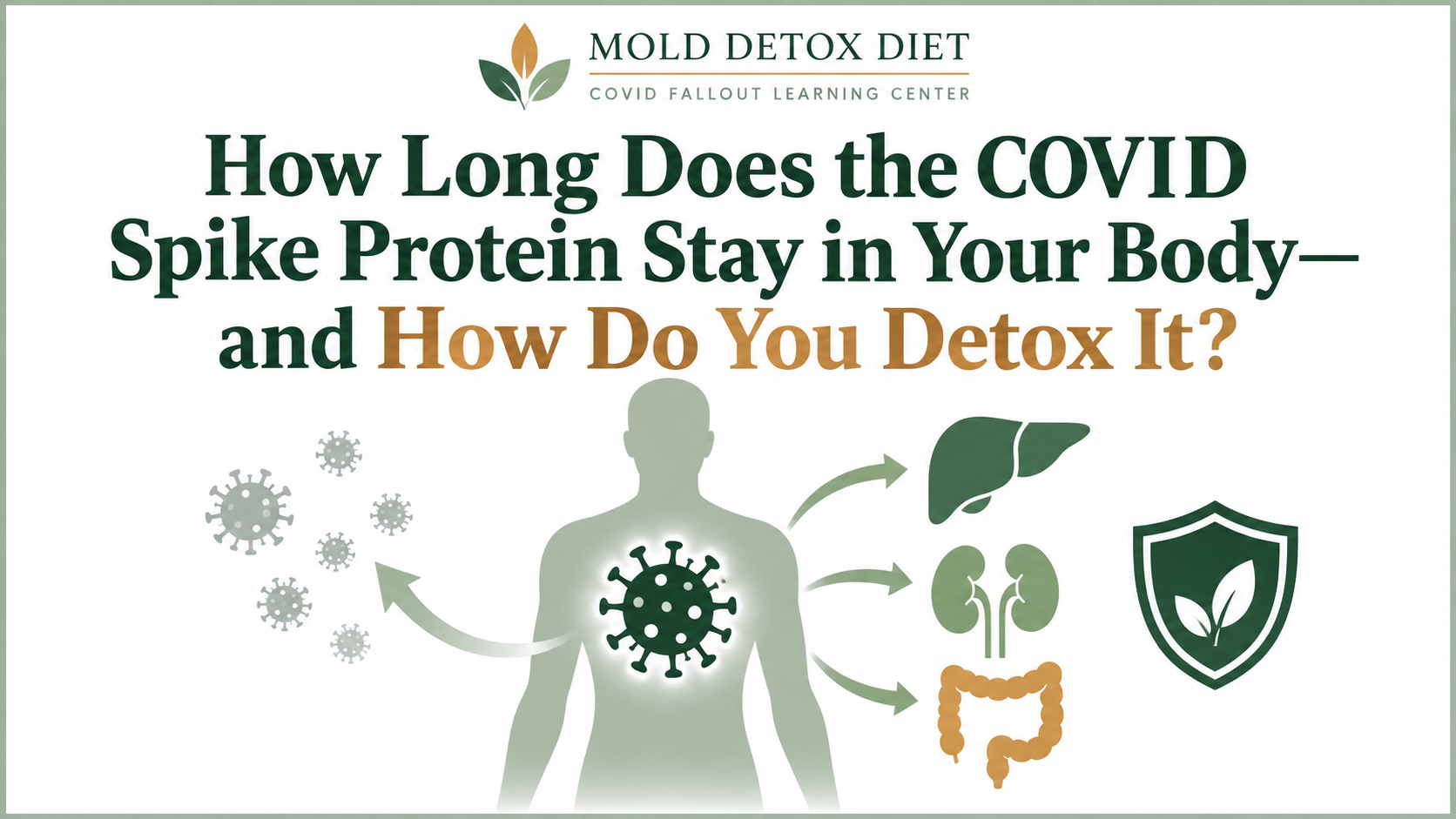
How Long Does the COVID Spike Protein Stay in Your Body—and How Do You Detox It?
By Dr. Margaret Christensen and Dr. Gail Clayton
This article presents the clinical perspectives and educational approaches discussed by Dr. Margaret Christensen and Dr. Gail Clayton during their COVID Fallout Summit and follow-up Q&A sessions.
If you are struggling with lingering fatigue, brain fog, or joint pain after a COVID-19 infection or vaccination, you may be wondering if the viral spike protein is still stuck in your system. Research shows that SARS-CoV-2 spike protein fragments can linger in the blood and body tissues for six months or longer, continuing to trigger chronic inflammation and tissue irritation.
Fortunately, functional medicine strategies developed by Dr. Margaret Christensen and Dr. Gail Clayton focus on supporting your body’s natural cleanup processes to break down, dislodge, and eliminate these persistent proteins.
Where Does the Spike Protein Linger?
Initially, medical experts believed the spike protein produced during a viral infection or after vaccination would break down within days. However, emerging laboratory and clinical evidence paints a different picture:
In the Bloodstream: A study by Brogna et al. (August 2023) detected recombinant spike protein circulating in the blood of 50% of vaccinated individuals up to six months after vaccination.
In Tissue Reservoirs: Advanced light-sheet microscopy studies show that the S1 spike protein fragment accumulates in specific tissue niches, including the skull marrow, long bones (such as the tibia and femur), meninges, and brain cortex—even in individuals who test negative for active viral infection.
When spike protein lingers in these reservoirs, it acts like a splinter in the tissue. Functional medicine clinicians refer to this systemic disruption as "spikeopathy"—a state where lingering spike fragments irritate the lining of blood vessels (endothelialitis), promote microscopic blood clots, and block vital cell receptors.
Step 1: Trigger Cellular Recycling with Autophagy
The primary way your body cleans out damaged cellular debris and toxic proteins is through a natural process called autophagy (literally "self-eating"). When autophagy is activated, cells engulf and digest lingering viral fragments.
Dr. Christensen and Dr. Clayton recommend two key lifestyle strategies to stimulate autophagy:
Intermittent Fasting: Giving your digestive system a break for 14 to 16 hours overnight signals your body to turn on internal cellular recycling mechanisms.
Plant-Forward, Anti-Inflammatory Diet: Removing processed foods, non-organic grains, and common inflammatory triggers allows your immune system to redirect its energy toward cellular repair.
Step 2: Digest Spike Fragments with Proteolytic Enzymes
Because the spike protein is a tough, structured protein, your body often needs specialized digestive enzymes to break it apart. Proteolytic and fibrinolytic enzymes act like "molecular pac-men," dissolving spike fragments and micro-clots in the bloodstream:
Nattokinase: Derived from fermented soybeans, Nattokinase is widely studied for its ability to degrade spike protein structures and dissolve fibrin micro-clots.
Serrapeptase & Lumbrokinase: These potent fibrinolytic enzymes help digest circulating inflammatory proteins and reduce vessel inflammation.
Clinical Safety Note: When using proteolytic enzymes to break down or dislodge spike protein from nerve receptors (such as nicotinic acetylcholine receptors), free-floating protein debris can briefly increase inflammation. Enzymes like Lumbrokinase should be paired with proper hydration and liver support to ensure safe clearance.
Practitioner Protocol on Fullscript
Spike Protein Enzyme Protocols:
These supplement collections are curated educational resources. Purchases made through our Fullscript dispensary may provide compensation to our practice. Supplements are not substitutes for individualized medical care.
Step 3: Lower Your Total Body Burden
Detoxifying the spike protein is not just about taking a single enzyme—it requires lowering your body's overall inflammatory load. If your immune system is already fighting mold toxicity (CIRS), heavy metals, or gut dysbiosis, it will struggle to clear the spike protein efficiently.
Foundational nutrients recommended in Dr. Christensen's and Dr. Clayton's recovery protocols include:
Niacinamide (Vitamin B3): Restores depleted cellular energy (NAD+) and calms rapid heart rate and chronic fatigue.
Vitamin D3, Zinc, and Quercetin: Strengthen immune cell function and stabilize mast cells.
Melatonin and CoQ10: Protect mitochondrial energy production and reduce oxidative stress in brain and heart tissue.
For individuals with severe Mast Cell Activation Syndrome (MCAS) or food allergies, potent detoxifiers like Glutathione must be introduced slowly to avoid triggering inflammatory flares.
Summary and Next Steps
While lingering spike protein can cause persistent symptoms, your body possesses powerful built-in detox mechanisms. By activating cellular autophagy through fasting, consuming an anti-inflammatory diet, and using targeted proteolytic enzymes, you can help your system break down and eliminate lingering spike debris. Always work with a trained functional medicine practitioner to customize your protocol safely.
Frequently Asked Patient Questions
1. Is lingering spike protein caused by COVID infection, the vaccine, or both?
Evidence shows that both natural COVID-19 infection and mRNA vaccination can leave lingering spike protein fragments in tissues and circulation. However, mRNA vaccines cause cells to produce spike protein directly, which research shows can persist in circulation for up to six months in a significant portion of individuals.
2. How long does a spike detox protocol take to work?
Recovery timelines vary based on your total body burden, underlying health, and immune status. Many patients report improvements in fatigue and brain fog within 30 to 90 days of consistent diet, enzyme, and lifestyle modifications, while deeper tissue clearance may take several months.
3. Can I do a spike detox if I have sensitive mast cells or allergies?
Yes, but you must start gently. Patients with Mast Cell Activation Syndrome (MCAS) should stabilize histamine levels with an anti-inflammatory diet and gentle binders before introducing high-dose enzymes or strong antioxidants like Glutathione.
Sources & References:
Brogna C, et al. Detection of recombinant Spike protein in the blood of individuals vaccinated against SARS-CoV-2. (2023).
Rong Z, et al. SARS-CoV-2 Spike Protein Accumulation in the Skull-Meninges-Brain Axis. bioRxIV.
Dr. Margaret Christensen & Dr. Gail Clayton, COVID Fallout Summit & Q&A Educational Protocols.
More in Spike Protein, Vaccine Injury & Neutralization Protocols
Go Deeper
Mold, Mast Cells, & Autoimmunity — our in-depth course on immune modulation, mast cells, and biotoxin illness mechanisms.
Explore all of our educational courses
Mentored Healing — enrollment opening soon. Join the waitlist for guided education and community support.
The information in COVID Fallout Resources is for educational purposes only and is not intended as medical advice. Please consult a qualified healthcare provider about your individual situation before starting, stopping, or changing any supplement, medication, or protocol.