Loss of Smell, Tinnitus, and Receptor Blockade: The Nicotine Patch Protocol and Neuro-Sensory Recovery
By Dr. Margaret Christensen and Dr. Gail Clayton
This article presents the clinical perspectives and educational approaches discussed by Dr. Margaret Christensen and Dr. Gail Clayton during their COVID Fallout Summit and follow-up Q&A sessions.
Among the most lingering and frustrating symptoms of Long COVID are neuro-sensory disruptions—including the total loss of smell (anosmia), loss of taste, chronic ear ringing (tinnitus), sound sensitivity, and dizziness.
While traditional medicine often offers few solutions for post-viral sensory loss, functional medicine protocols evaluated by Dr. Margaret Christensen and Dr. Gail Clayton examine a breakthrough mechanism: nicotinic acetylcholine receptor blockade and the therapeutic use of low-dose nicotine patches to restore sensory nerve function.
The Nicotinic Receptor Blockade Hypothesis
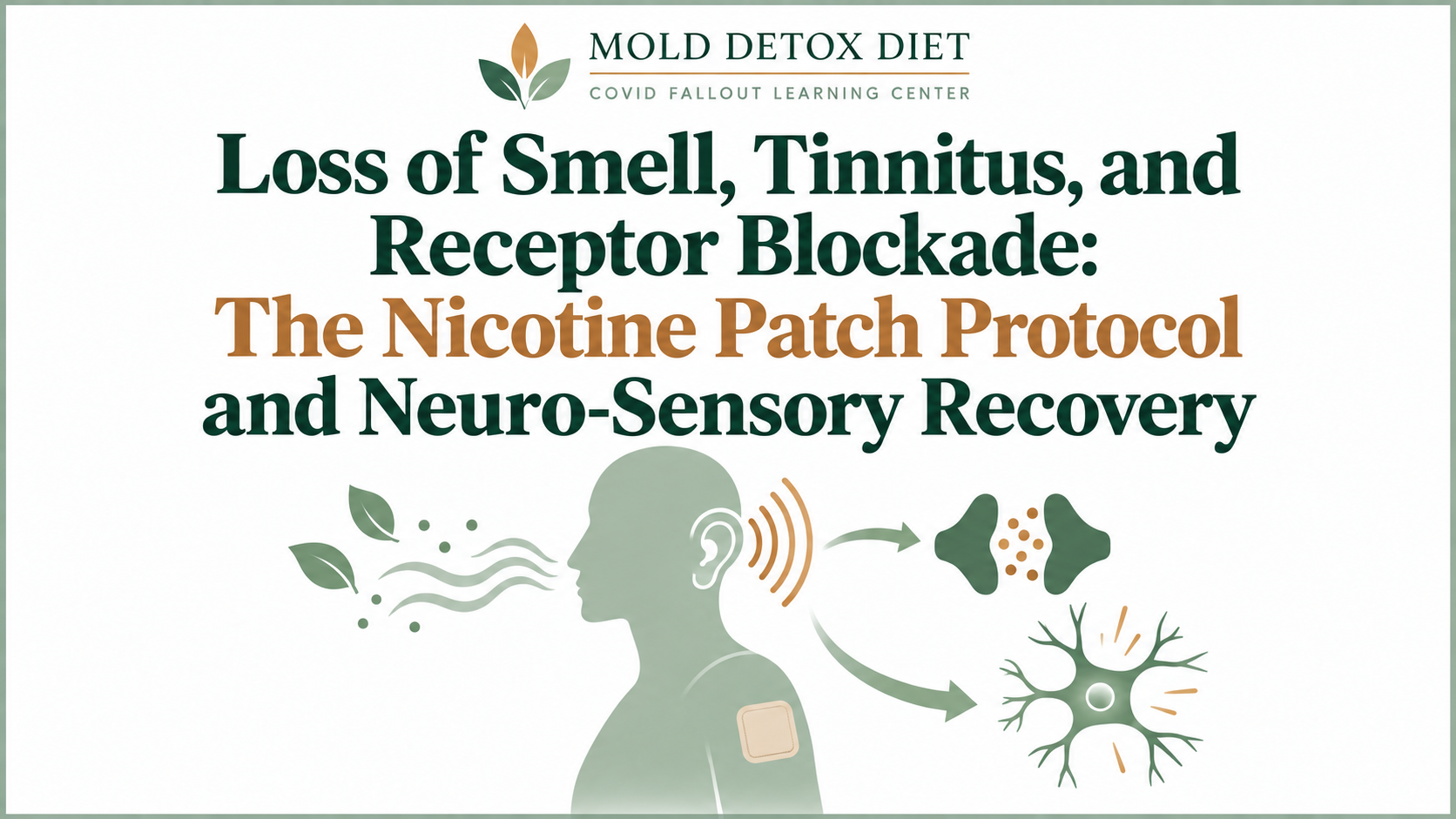
The SARS-CoV-2 spike protein contains structural amino acid sequences that bind tightly to alpha-7 nicotinic acetylcholine receptors (nAChRs). These crucial receptors are located throughout your olfactory (smell) nerves, inner ear sensory structures, central nervous system, lungs, gut, and immune cells.
When spike proteins attach to these receptors, they trigger a brief surge in nerve activity followed by long-term receptor inhibition—effectively jamming the receptor like a "sliver you can't get out". This leaves sensory and autonomic nerves operating in a restricted, low-power mode, leading to persistent loss of smell, tinnitus, fatigue, and brain fog.
How Nicotine Dislodges the Spike Protein
Nicotine has a significantly higher binding affinity (magnetic attraction) for nicotinic acetylcholine receptors than the viral spike protein does. When low-dose nicotine is introduced into the bloodstream, it actively competes for these receptor sites, "bumping" the lingering spike protein fragments off the nerve receptors and allowing normal neurotransmitter signaling to resume.
This mechanism helps explain early epidemiological findings showing that smokers and nicotine users experienced surprisingly lower rates of severe acute COVID-19 hospitalization.
Step-by-Step Clinical Protocols: Nicotine, Lumbrokinase, and Theanine
To dislodge spike proteins safely without triggering severe inflammatory reactions, functional protocols (such as Dr. Jill Crista's Long Haul Protocol) utilize a carefully staged approach:
1. Mandatory Pre-Treatment: Lumbrokinase
When nicotine bumps spike fragments off nerve receptors, free-floating inflammatory protein debris enters circulation. This debris can trigger micro-clots and vascular inflammation. Lumbrokinase—a potent fibrinolytic enzyme—must be started 1 to 2 weeks prior to starting nicotine and continued throughout the protocol to digest circulating spike debris and protect blood vessels.
2. Dosing the Nicotine Patch
For sensitive individuals, starting at a full 7 mg patch can cause nausea, diarrhea, or heart palpitations. Clinicians recommend starting low and titrating up:
Days 1–4: Cut a 7 mg OTC nicotine patch into quarters; apply 1/4 patch daily.
Days 5–8: Increase to 1/2 patch daily.
Days 9–12: Increase to 3/4 patch daily.
Days 13–19: Use a full 7 mg patch daily for 7 days, then discontinue.
3. Preventing Receptor Up-Regulation with L-Theanine
If nicotine is used for more than a few weeks, nerve cells adapt by multiplying their nicotinic receptors—creating more potential docking sites for spike protein. Adding L-Theanine (100 mg per 2–3 mg of nicotine) prevents receptor up-regulation, making it easy to stop nicotine without dependency or rebound symptoms.
4. Enhancing Acetylcholine with Huperzine A
Combining nicotine with Huperzine A blocks acetylcholinesterase (the enzyme that breaks down acetylcholine), keeping natural neurotransmitter activity elevated longer and helping re-stimulate bowel motility.
Addressing Post-Viral Tinnitus and Sound Sensitivity
For persistent ear ringing (tinnitus) and sound sensitivity, clinicians pair receptor clearance with targeted endothelial and cell membrane support:
Ginkgo Biloba: Improves micro-capillary blood flow to the inner ear and auditory nerves.
Membrane Repair Nutrients: Phosphatidylcholine (PC), Tocotrienols (Vitamin E), Niacinamide, Vitamin D3, and B-Complex nourish nerve sheaths and calm neuro-sensory excitability.
Practitioner Protocol on Fullscript
These supplement collections are curated educational resources. Purchases made through our Fullscript dispensary may provide compensation to our practice. Supplements are not substitutes for individualized medical care.
Important Precautions and Stopping Protocols
If a patient experiences a severe or strange reaction to nicotine (such as sudden extreme nausea or symptom flares), the spike protein may have injured epithelial cell linings. In such cases, halt the nicotine immediately, keep taking Lumbrokinase spike protectors, and drink vulnerary herbal teas (plantain, red clover, cleavers) to heal tissue before attempting nicotine again.
Summary and Next Steps
Loss of smell, tinnitus, and post-viral sensory issues are tied to spike protein blockade of nicotinic acetylcholine receptors. By utilizing low-dose nicotine patches to dislodge spike fragments—always paired with Lumbrokinase to dissolve protein debris and L-Theanine to protect receptors—patients can safely support neuro-sensory recovery.
Frequently Asked Patient Questions
1. How do nicotine patches help restore my loss of smell and taste after COVID?
Nicotine has a stronger attraction to nerve receptors than the viral spike protein. When applied via a low-dose patch, nicotine dislodges the lingering spike fragments jammed in your olfactory receptors, allowing normal smell signaling to resume.
2. Why must I take Lumbrokinase before starting a nicotine patch protocol?
Bumping spike proteins off nerve receptors releases inflammatory protein debris into your bloodstream, which can cause micro-clots. Lumbrokinase digests these free-floating spike fragments and protects your blood vessels.
3. Will using a low-dose nicotine patch for Long COVID make me addicted?
No. Low-dose transdermal patches deliver a slow, steady release of nicotine without the rapid brain spikes associated with smoking. Long-term studies (such as the MIND study) and pairing nicotine with L-Theanine prevent receptor addiction and allow easy discontinuation.
Source Materials & References:
Dr. Jill Crista, Long Haul Protocol Notes on Nicotinic Receptors & Nicotine Patch Protocols.
Dr. Suzanne K. Gazda, FLCCC Brain Health & Nicotine Test References.
Dr. Margaret Christensen & Dr. Gail Clayton, COVID Fallout Summit & Educational Q&A Transcripts.
More in Brain Fog, POTS & Nervous System Recovery
Go Deeper
Mold, Mast Cells, & Autoimmunity — our in-depth course on immune modulation, mast cells, and biotoxin illness mechanisms.
Explore all of our educational courses
Mentored Healing — enrollment opening soon. Join the waitlist for guided education and community support.
The information in COVID Fallout Resources is for educational purposes only and is not intended as medical advice. Please consult a qualified healthcare provider about your individual situation before starting, stopping, or changing any supplement, medication, or protocol.