Taming POTS, Dysautonomia, and Internal Vibrations After COVID: Restoring Autonomic Regulation
By Dr. Margaret Christensen and Dr. Gail Clayton
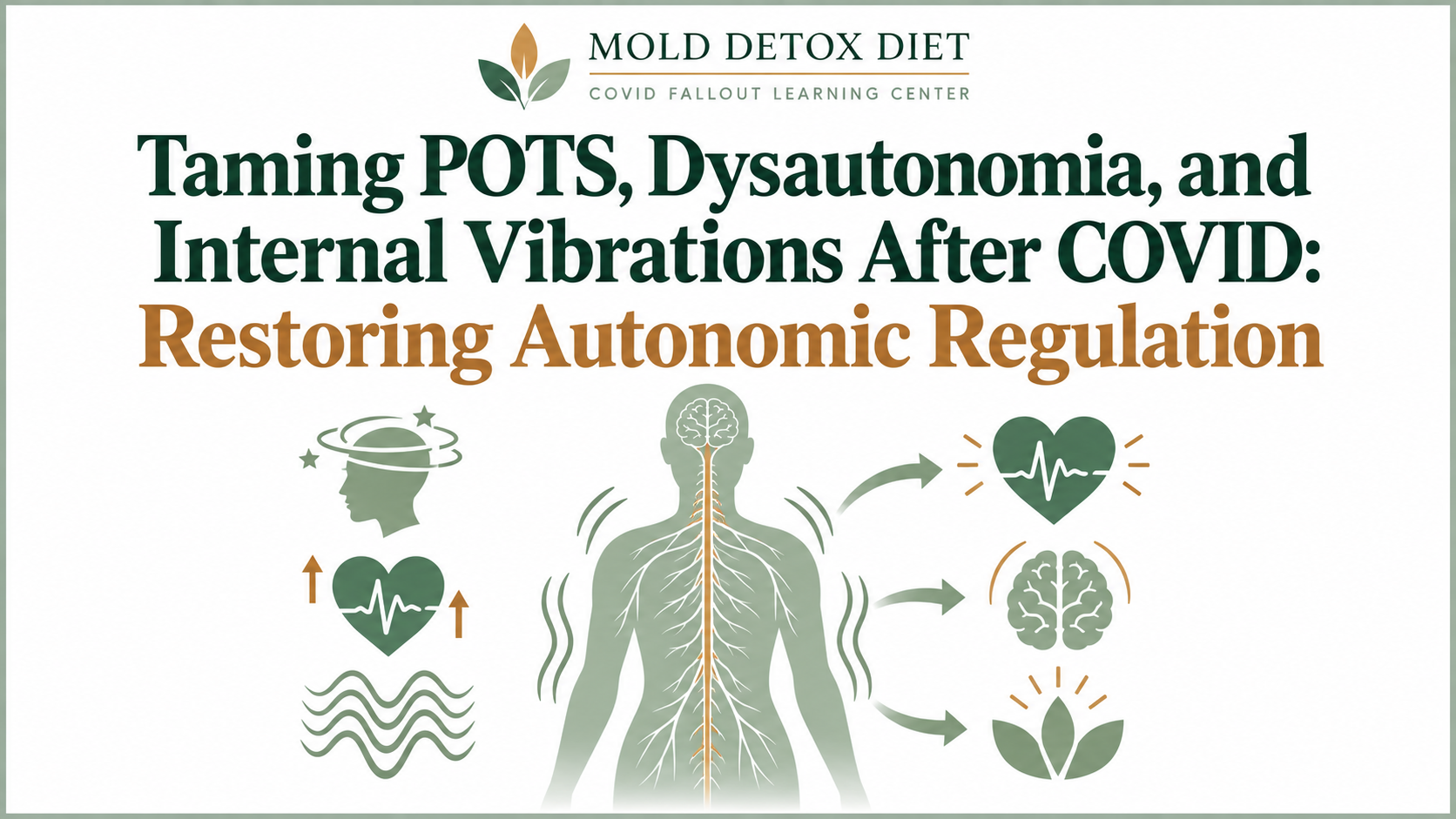
This article presents the clinical perspectives and educational approaches discussed by Dr. Margaret Christensen and Dr. Gail Clayton during their COVID Fallout Summit and follow-up Q&A sessions.
Standing up to make a cup of tea shouldn't cause your heart to race to 130 beats per minute, leave you gasping for air, or trigger a sudden wave of dizziness. Yet, for millions recovering from COVID-19 or vaccine injuries, these frightening episodes are a daily reality.
In their clinical reviews, Dr. Margaret Christensen and Dr. Gail Clayton address the widespread rise of Postural Orthostatic Tachycardia Syndrome (POTS) and dysautonomia—conditions where the autonomic nervous system loses its ability to automatically regulate blood pressure, heart rate, and body temperature.
What Is Dysautonomia and POTS?
The autonomic nervous system is your body's automatic control center, regulating involuntary functions like heart rate, digestion, breathing, and blood vessel constriction. When COVID infection or vaccination disrupts this system, dysautonomia results.
A large-scale study published in Nature Cardiovascular Research (covering over 284,000 vaccinated individuals) documented a 33% increase in POTS diagnoses post-vaccination, alongside significant post-viral POTS surges.
Clinicians classify POTS into three primary clinical subtypes:
Neuropathic POTS: Small fiber nerve damage in the lower limbs prevents blood vessels from constricting properly when standing, causing blood pooling in the legs and feet (often making them turn red, purple, or cold).
Hypovolemic POTS: Low overall blood volume (both plasma and red blood cells) leads to severe weakness, fatigue, and low stamina.
Hyperadrenergic POTS: The sympathetic nervous system overreacts, flooding the body with excess norepinephrine upon standing. This triggers extreme racing heart rate, blood pressure spikes, tremors, migraine headaches, and severe anxiety.
Small Fiber Neuropathy and "Internal Vibrations"
Between 55% and 85% of Long COVID and post-vaccine injury patients suffer from neuropathic symptoms, including burning feet, numbness, skin hypersensitivity, and a distinct feeling of internal vibrations—a buzzing sensation inside the chest, pelvis, or spine.
These internal vibrations are directly linked to Small Fiber Neuropathy (SFN). Small unmyelinated nerve fibers line capillary walls and control involuntary vascular contraction. When lingering spike proteins, micro-clots, or autoantibodies attack these tiny nerves, they misfire continuously, creating an internal buzzing feeling.
Routine nerve conduction tests (EMGs) only measure large motor nerve fibers and will come back completely normal. Confirming small fiber damage requires a specialized Skin Punch Biopsy (such as the Syn One test), which measures nerve fiber density and identifies pathological protein deposits like alpha-synuclein.
Why Aerobic Exercise Can Worsen Symptoms (Post-Exertional Malaise)
A common mistake made by well-meaning practitioners is advising POTS patients to "get back to cardio." In post-COVID dysautonomia, pushing through fatigue triggers Post-Exertional Malaise (PEM)—a severe crash in energy, mental focus, and physical function that can last for days or weeks.
Strenuous exercise spikes cortisol and histamine while overwhelming depleted mitochondria. Clinicians strongly advise replacing aerobic cardio with gentle, recumbent movement—such as restorative yoga, floor stretching, Theraband resistance, or low-level vibration plate sessions.
Restoring Autonomic Regulation: Foundational Protocols
Taming dysautonomia requires restoring blood volume, supporting adrenal function, and calming vascular inflammation:
Fluid Expansion & Electrolytes: Increasing fluid intake paired with trace minerals and unrefined salts (such as Celtic sea salt) helps expand blood volume and relieve Hypovolemic POTS symptoms.
Pre-Activity Hydration: Drinking electrolyte water 15–20 minutes before mild activity or movement helps prevent exercise-induced histamine flares and blood pressure drops.
Adrenal & Cellular Support: B-complex vitamins (especially B1, B6, B12), Vitamin C, Niacinamide, and adrenal glandular support help stabilize blood pressure swings and cortisol production.
Vascular Protection: Ginkgo Biloba and Arterosil improve capillary blood flow and repair damaged vessel linings.
These supplement collections are curated educational resources. Purchases made through our Fullscript dispensary may provide compensation to our practice. Supplements are not substitutes for individualized medical care.
Summary and Next Steps
POTS, dysautonomia, and internal vibrations stem from real biological damage—including small fiber neuropathy, low blood volume, autoantibodies, and sympathetic overload. By avoiding strenuous exercise crashes, expanding blood volume with electrolytes, supporting adrenal function, and utilizing gentle recumbent movement, you can help retrain your autonomic nervous system.
Frequently Asked Patient Questions
1. Why does my heart race and my feet turn purple when I stand up?
This is a classic sign of Neuropathic POTS and Small Fiber Neuropathy. Damaged nerves in your legs cannot signal blood vessels to constrict, causing blood to pool in your lower extremities. Your heart responds by pumping rapidly to keep blood flowing to your brain.
2. What causes the strange "internal vibrations" or buzzing feeling inside my body?
Internal vibrations occur when small sensory and autonomic nerve fibers suffer inflammatory damage from persistent spike fragments or capillary micro-clots, causing tiny nerves to fire continuously.
3. Why does exercise make my POTS symptoms and fatigue much worse?
Strenuous exertion triggers Post-Exertional Malaise (PEM) by surging stress hormones and histamine while straining impaired mitochondria. Autonomic recovery requires gentle recumbent stretching and pacing rather than aerobic cardio.
Source Materials & References:
Kwan A, et al. Apparent risks of postural orthostatic tachycardia syndrome diagnoses after COVID-19 vaccination and SARS-CoV-2 Infection. Nature Cardiovascular Research (2022).
Dr. Suzanne K. Gazda, Dysautonomia & Small Fiber Neuropathy Clinical Lecture.
Dr. Margaret Christensen & Dr. Gail Clayton, COVID Fallout Summit & Educational Q&A Transcripts.
More in Brain Fog, POTS & Nervous System Recovery
Go Deeper
Mold, Mast Cells, & Autoimmunity — our in-depth course on immune modulation, mast cells, and biotoxin illness mechanisms.
Explore all of our educational courses
Mentored Healing — enrollment opening soon. Join the waitlist for guided education and community support.
The information in COVID Fallout Resources is for educational purposes only and is not intended as medical advice. Please consult a qualified healthcare provider about your individual situation before starting, stopping, or changing any supplement, medication, or protocol.