Is It Long COVID or MCAS? Taming Histamine Flushing, Hives, and Sudden Food Intolerances
By Dr. Margaret Christensen and Dr. Gail Clayton
This article presents the clinical perspectives and educational approaches discussed by Dr. Margaret Christensen and Dr. Gail Clayton during their COVID Fallout Summit and follow-up Q&A sessions.
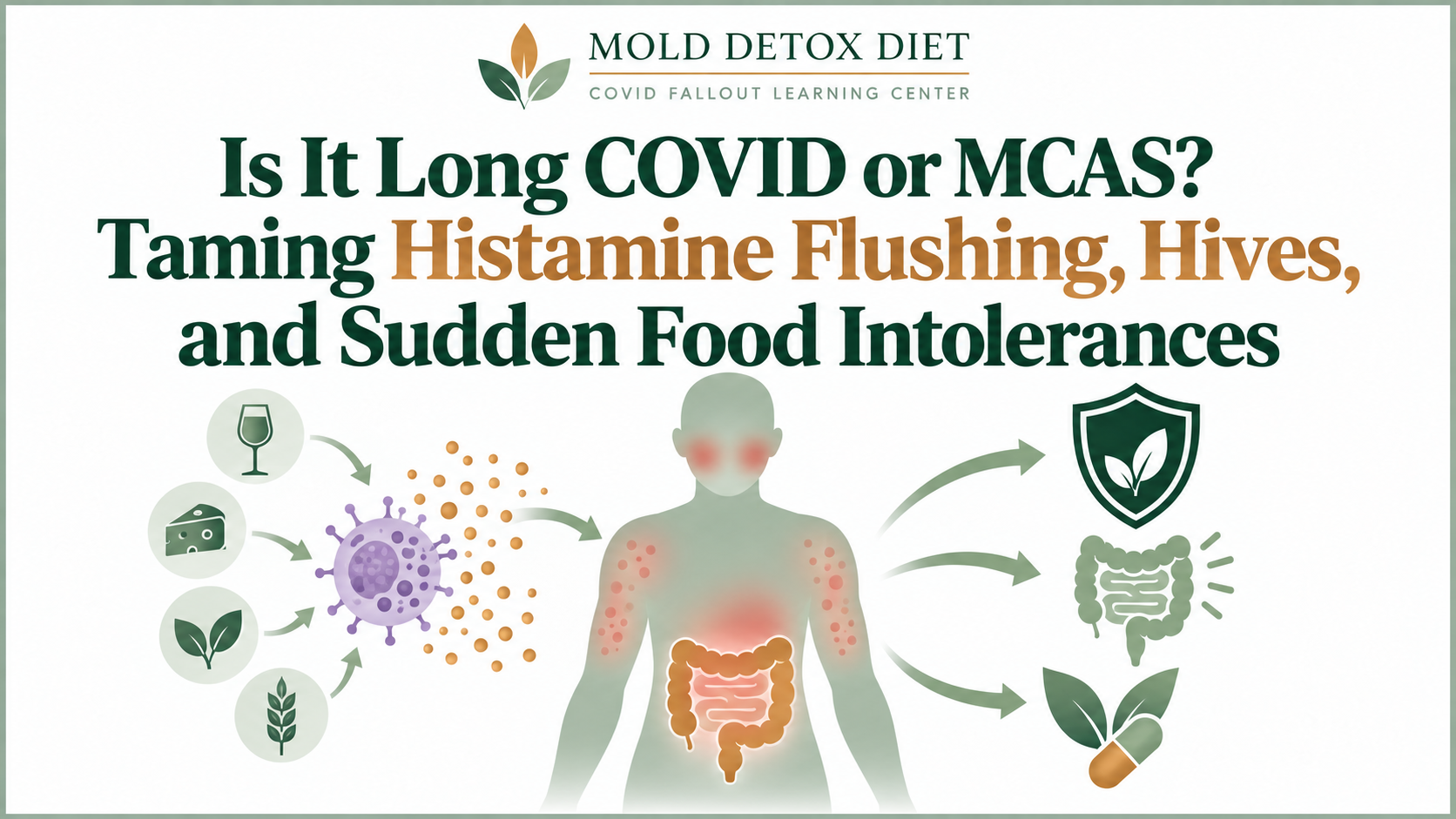
If you have suddenly developed strange food allergies, hives, dermatographia (skin writing), or a feverish facial flush after a COVID-19 infection or vaccination, your immune system may be experiencing Mast Cell Activation Syndrome (MCAS).
Many patients struggling with Long COVID assume their ongoing symptoms are strictly due to lingering viral tissue damage. However, clinical evaluations by Dr. Margaret Christensen and Dr. Gail Clayton show that spike protein exposure frequently destabilizes mast cells—the frontline sentinels of your immune system—causing them to flood your body with histamine and inflammatory cytokines.
What Are Mast Cells and How Does Spike Protein Activate Them?
Mast cells are specialized white blood cells located at environmental entry points in your body, including your skin, GI tract, respiratory lining, and brain tissue. Under normal conditions, mast cells store histamine, heparin, and signaling chemicals, releasing them only to fight off parasites or heal wounds.
Following viral infection or spike protein exposure, mast cells can become chronically hyper-reactive. Spike protein binds to cell surfaces and triggers continuous degranulation, releasing over 200 inflammatory chemicals into circulation.
Common signs of post-COVID MCAS include:
Feverish Facial Flushing: Sudden, intense heat and redness across the face, neck, and chest, often accompanied by rapid heart rate or anxiety spikes.
Sudden Food Intolerances: Reacting to high-histamine foods (such as aged cheese, avocados, fermented products, wine, and tomatoes) with bloating, hives, headache, or diarrhea.
Dermatological Reactions: Unexplained itching, rashes, dermatographia, or swelling in feet and hands.
Neurological Flares: Brain fog, temple pain, and sudden anxiety triggered by environmental smells, chemicals, or minor supplement doses.
Clinicians note that patients with genetic variations (such as MTHFR mutations) or connective tissue hypermobility (Ehlers-Danlos Syndrome / EDS) are particularly vulnerable to post-viral mast cell activation.
Why Caution Is Required with Glutathione in Severe MCAS
In functional medicine, Glutathione is widely celebrated as the body's master antioxidant. However, Dr. Christensen and Dr. Clayton issue a critical clinical warning regarding its use in hyper-sensitive patients:
If a patient suffers from severe MCAS—marked by daily hives, severe allergies, dumping diarrhea, and extreme anxiety—pushing high-dose Glutathione too hard or too fast can trigger severe inflammatory flares.
Glutathione mobilizes stored toxins and heavy metals. When liver detoxification pathways or mast cell barriers are compromised, this rapid mobilization overburdens the system, leading to heightened histamine release and severe symptom setbacks. Sensitive patients must first stabilize mast cell membranes before introducing potent antioxidants.
Targeted Clinical Strategies to Stabilize Mast Cells
Restoring histamine balance requires a multi-layered approach that blocks histamine receptors, stabilizes cell membranes, and calms subconscious nervous system threats:
H1 and H2 Histamine Blockers: Combining H1 receptor blockers (such as Claritin, Zyrtec, or Hydroxyzine) with H2 receptor blockers (such as Pepcid / Famotidine) helps bind circulating histamine and lower systemic vascular and gastric inflammation.
Leukotriene Inhibitors: Prescription options like Montelukast (Singulair) or Zafirlukast (Accolate) lower TNF-alpha and Interleukin-6 (IL-6), reducing respiratory and microglial mast cell reactivity.
Flavonoids & Natural Stabilizers: Luteolin (found in NeuroProtek) is particularly effective at inhibiting IL-6 and microglial activation. Additional natural stabilizers include Quercetin, D-Hist, PEA (Palmitoylethanolamide), Vitamin C, Bromelain, and local raw honey.
Low-Histamine AIP Diet: Following a strict 3-to-4-week low-histamine Autoimmune Paleo diet helps reduce dietary histamine input while gastrointestinal linings heal.
Limbic Retraining: Programs like Primal Trust help lower the brain's subconscious threat detection, raising the threshold for mast cell degranulation.
Practitioner Protocol on Fullscript
These supplement collections are curated educational resources. Purchases made through our Fullscript dispensary may provide compensation to our practice. Supplements are not substitutes for individualized medical care.
Summary and Next Steps
Post-COVID histamine flushing, hives, and food intolerances are primary markers of Mast Cell Activation Syndrome. By utilizing H1/H2 blockers, natural mast cell stabilizers like Luteolin and Quercetin, a low-histamine diet, and avoiding premature high-dose Glutathione, you can calm hyper-reactive mast cells and support systemic recovery.
Frequently Asked Patient Questions
1. Why do I get a feverish face flush and sudden anxiety after eating foods I used to tolerate?
This is a classic sign of Mast Cell Activation Syndrome (MCAS). Lingering spike protein destabilizes mast cells in your gut and skin, causing them to dump histamine into your bloodstream when you eat high-histamine foods. Histamine expands blood vessels (causing flushing) and stimulates the sympathetic nervous system (causing anxiety).
2. Why do Dr. Christensen and Dr. Clayton caution against starting high-dose Glutathione if I have severe MCAS?
In severe MCAS, rapid detoxification with Glutathione can mobilize toxins faster than your liver and gut can eliminate them. This sudden surge overloads hypersensitive mast cells, triggering severe hives, dumping diarrhea, or anxiety flares. Mast cells must be stabilized first.
3. How do H1 and H2 histamine blockers work together with natural mast cell stabilizers like Luteolin and Quercetin?
H1 and H2 blockers act on the outside of cells to prevent released histamine from attaching to blood vessel and gut receptors. Natural stabilizers like Luteolin and Quercetin work inside the mast cell to prevent it from degranulating and releasing histamine in the first place.
Source Materials & References:
Dr. Suzanne K. Gazda, Mast Cell Activation Disorder & POTS References.
Front Line COVID-19 Critical Care Alliance (FLCCC) MCAS & Histamine Protocols.
Dr. Margaret Christensen & Dr. Gail Clayton, COVID Fallout Summit & Educational Q&A Transcripts.
More in Mast Cell Activation (MCAS), Histamine & Co-Infections
Go Deeper
Mold, Mast Cells, & Autoimmunity — our in-depth course on immune modulation, mast cells, and biotoxin illness mechanisms.
Explore all of our educational courses
Mentored Healing — enrollment opening soon. Join the waitlist for guided education and community support.
The information in COVID Fallout Resources is for educational purposes only and is not intended as medical advice. Please consult a qualified healthcare provider about your individual situation before starting, stopping, or changing any supplement, medication, or protocol.