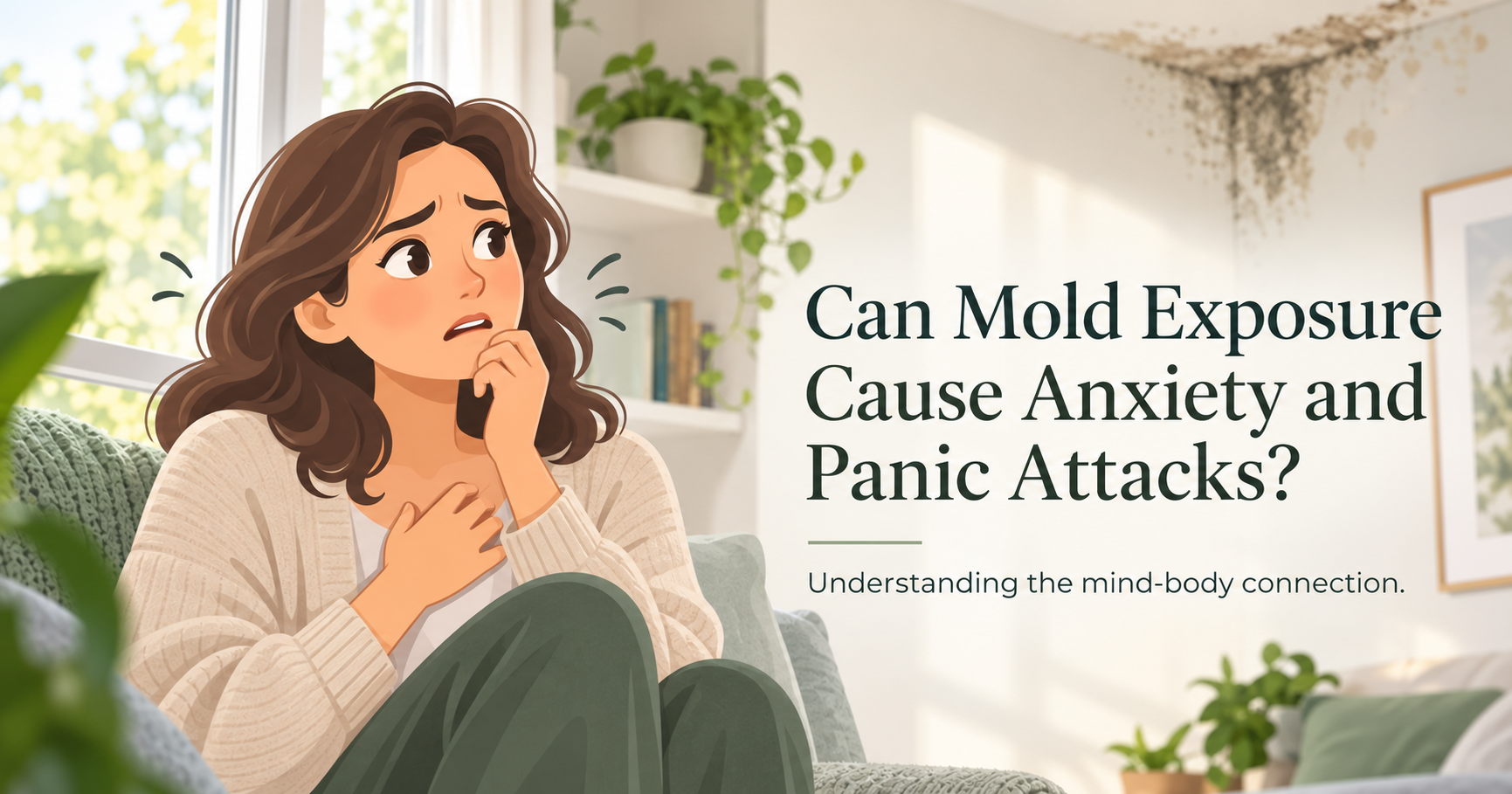
Can Mold Exposure Cause Anxiety and Panic Attacks? Understanding the Mind-Body Connection
Why a damp or mold-affected environment may be associated with anxiety, poor sleep, and emotional distress—and what you can do about it.
By Dr. Gail Clayton, DCN, CNS, MS, RPh, LDN, and Dr. Margaret Christensen, MD
Have you ever experienced a sudden wave of anxiety, a racing heart, or an overwhelming sense of fear without understanding why?
Perhaps you have always considered yourself a calm, emotionally stable person. Then, seemingly out of nowhere, you began experiencing anxiety, panic attacks, irritability, or difficulty sleeping.
If these symptoms developed while living or working in a water-damaged building, you may have wondered whether mold exposure could be contributing.
Research suggests that living in damp or mold-affected housing is associated with increased anxiety, depression, and psychological distress. However, the reasons are complex, and scientists are still investigating the biological and environmental factors involved.
Understanding these connections can help you ask better questions, identify potential contributors, and take practical steps toward feeling better.
What Does the Research Say About Mold and Anxiety?
For years, most mold-related health research focused on respiratory symptoms, allergies, and asthma. More recently, researchers have begun examining possible relationships between damp indoor environments and mental health.
A 2024 state-of-the-science review published in Environmental Health Perspectives examined 19 studies investigating damp or mold-affected housing and mental health.[1]
Researchers identified associations between dampness or mold exposure and several mental health outcomes, including:
Anxiety and psychological distress
Depression and persistent low mood
Stress and reduced emotional well-being
Emotional symptoms and emotional regulation difficulties in children
The researchers also emphasized that additional studies are needed to determine why these associations occur and whether specific exposures directly cause the reported symptoms.[1]
Another review, published in Housing Studies, examined 30 studies. Of the 24 studies that evaluated unadjusted statistical associations, 21 found a significant relationship between damp or mold-affected homes and psychological outcomes. Of the 17 studies that used adjusted analyses to account for other factors, 13 found that damp or mold remained a statistically significant independent predictor.[2]
These findings deserve attention, but an association does not mean that every person experiencing anxiety in a mold-affected building has a mold-induced neurological condition.
Researchers have proposed several possible explanations, including physical illness, inflammatory responses, disturbed sleep, housing-related stress, and other environmental factors.[1,2]
Five Ways a Mold-Affected Environment May Influence Anxiety
1. Inflammation and the Brain
Inflammation is one of the body's natural responses to injury, infection, and certain environmental exposures.
We often think of inflammation as something that causes joint pain, swelling, or digestive discomfort. However, the immune system and nervous system communicate continuously.
Inflammatory signaling can influence sleep, mood, fatigue, and how the brain responds to stress.
In people with mold allergies or certain immune-mediated respiratory conditions, damp indoor environments may contribute to inflammatory symptoms.
Scientists are also investigating whether some fungal compounds and mycotoxins affect neurological signaling or inflammatory pathways. Much of this mechanistic research comes from laboratory or animal studies, and its significance for typical human indoor exposures remains uncertain.[1]
The important distinction is that inflammation may contribute to changes in how we feel, but anxiety alone cannot establish that mycotoxins are affecting the brain.
2. A Nervous System That Remains on High Alert
The autonomic nervous system helps regulate functions such as breathing, heart rate, digestion, and our response to perceived danger.
One component, the sympathetic nervous system, prepares us to respond to a threat. This is commonly called the fight-or-flight response.
During this response, you may experience:
A racing or pounding heart
Rapid or shallow breathing
Tightness in the chest or shoulders
Sweating or trembling
Digestive discomfort
A sudden feeling of fear or alarm
These sensations can occur during panic attacks, but they can also accompany respiratory symptoms, sleep deprivation, and other medical conditions.
Living with persistent physical symptoms or concerns about your indoor environment may increase your sense of threat and keep your stress-response system more active.
This does not mean the symptoms are imaginary. It means that physical health, the nervous system, and emotional well-being are closely connected.
3. The Gut-Brain Connection
Your digestive system and brain communicate through nerves, hormones, immune signals, and substances produced by intestinal microorganisms.
This relationship is commonly called the gut-brain axis.
The intestinal microbiome participates in the metabolism of nutrients and compounds involved in signaling throughout the body.
Changes in gut function can also affect sleep, appetite, discomfort, and emotional well-being.
For example, someone dealing with chronic digestive symptoms may experience increased stress or anxiety, while stress itself may aggravate gastrointestinal symptoms.
Researchers are studying how environmental exposures, inflammation, and changes in the microbiome interact. However, it has not been established that ordinary indoor mold exposure produces anxiety by causing a specific intestinal microbial imbalance.
If you have digestive symptoms along with anxiety, both deserve appropriate evaluation rather than assuming one automatically explains the other.
4. Sleep Disturbances and Emotional Regulation
Poor sleep can significantly affect how we respond to everyday stress.
Even a few nights of inadequate sleep may make it more difficult to manage worry, concentrate, or respond calmly to challenging situations.
This can become a cycle:
Physical discomfort or environmental stress → disrupted sleep → increased emotional sensitivity → greater anxiety → more difficulty sleeping.
For some people, respiratory symptoms, congestion, coughing, or asthma may interrupt sleep. Others may lie awake worrying about their symptoms or the condition of their home.
Whatever the cause, improving sleep is an important part of addressing persistent anxiety.
5. The Emotional Burden of Living With Mold
There is another part of this conversation that deserves more attention: the psychological consequences of discovering that your home may be contributing to health problems.
People dealing with significant water damage may face difficult financial decisions, uncertainty about repairs, disputes over remediation, or the possibility of relocating.
Some may worry about their children's health or feel overwhelmed by conflicting information.
These experiences can produce substantial anxiety independently of any direct biological effect of mold.
The psychological research on damp housing recognizes that this emotional burden may be an important contributor to poor mental health.[1,2]
It is entirely possible for physical symptoms and the stress of dealing with a difficult housing situation to occur together. Both deserve support.
Why Can Mold-Related Health Concerns Sometimes Feel Like Panic Attacks?
A panic attack is a sudden episode of intense fear or discomfort that may include a racing heart, trembling, shortness of breath, dizziness, chest tightness, or a feeling that something terrible is about to happen.
Several medical conditions can produce symptoms that resemble panic attacks.
These include thyroid disorders, abnormal heart rhythms, respiratory problems, low blood glucose, medication effects, and certain other health conditions.
Respiratory symptoms are particularly relevant when evaluating a damp indoor environment.
The Centers for Disease Control and Prevention recognizes that exposure to damp or moldy buildings can cause or worsen respiratory and allergic conditions in susceptible people.[4,5]
Difficulty breathing, chest tightness, and a rapid heartbeat can be frightening, whether they originate from asthma, panic, or another condition.
For this reason, new or unexplained panic-like symptoms should not automatically be attributed to mold exposure.
A healthcare professional can help evaluate possible medical contributors, while environmental concerns are investigated separately.
Chest pain, severe breathing difficulty, fainting, or other potentially serious symptoms require urgent medical attention.
Can Neurotransmitters Be Involved?
Neurotransmitters are chemical messengers that help nerve cells communicate.
Two neurotransmitters frequently discussed in connection with anxiety are serotonin and gamma-aminobutyric acid (GABA).
Serotonin: More Than a Mood Chemical
Serotonin participates in mood regulation, sleep, appetite, and multiple functions throughout the body.
Its synthesis begins with tryptophan, an essential amino acid obtained from food.
Tryptophan can be converted into serotonin through a series of biochemical reactions that depend on appropriate enzyme activity and nutrient availability.
However, the relationship between serotonin and anxiety is complex. Anxiety cannot reliably be diagnosed as a simple serotonin deficiency based on symptoms.
There is also insufficient evidence to conclude that indoor mold exposure routinely produces a specific serotonin imbalance.
GABA: The Brain's Calming Messenger
GABA is the primary inhibitory neurotransmitter in the central nervous system.
Think of GABA as part of the brain's braking system. It helps regulate neuronal excitability and participates in normal sleep and stress responses.
Disturbances in GABA signaling have been investigated in anxiety disorders, but this does not mean that everyone with anxiety has a measurable GABA deficiency.
GABA is also available as a dietary supplement.
A 2020 systematic review examined human studies of oral GABA supplementation and found limited evidence for stress reduction and very limited evidence for sleep benefits.[3]
Although some individuals report feeling calmer when taking GABA, additional high-quality research is needed.
Can Amino Acids Help With Anxiety?
During the Toxic Mold Summit, Dr. Margaret Christensen interviewed nutritionist Trudy Scott about the relationship between mold-related health concerns, anxiety, and targeted amino acid supplementation.
Scott discussed her clinical experience using nutrients and amino acids such as tryptophan, 5-HTP, GABA, and D-phenylalanine in individuals experiencing anxiety or emotional distress.
One important theme in their discussion was the need to consider multiple contributing factors rather than looking for a single explanation.
Targeted supplementation is an area of interest in nutritional psychiatry, but it is important to distinguish individual clinical experiences from proven treatment benefits.
For example:
Tryptophan is an essential amino acid and a precursor to serotonin.
5-HTP is an intermediate compound in serotonin synthesis.
GABA is an inhibitory neurotransmitter, although the clinical benefits of oral supplementation remain uncertain.
D-phenylalanine has been investigated for possible effects on endogenous opioid peptide metabolism, but convincing clinical evidence for treating anxiety or mold-related symptoms is lacking.
These supplements are not established treatments for mold-related illness or panic disorder.
They can also have important risks. Tryptophan and 5-HTP may interact with medications that increase serotonin activity, including certain antidepressants, potentially causing dangerous adverse reactions.
Anyone considering these products should discuss them with a qualified healthcare professional, particularly if they take prescription medications or have complex medical conditions.
Never stop or taper a prescribed psychiatric medication without appropriate medical supervision.
What Should You Do if You Suspect Mold Exposure Is Contributing to Anxiety?
The most effective approach begins by addressing the factors that can be evaluated and modified.
1. Investigate Your Indoor Environment
If your home has visible mold, musty odors, water leaks, or a history of flooding, identify and correct the source of moisture.
The CDC recommends preventing indoor mold growth by controlling moisture and addressing water damage.[5]
Environmental inspection and remediation should focus on finding and correcting moisture problems rather than relying solely on air sampling or identifying individual mold species.
A dry, well-maintained indoor environment supports respiratory health and reduces avoidable exposure concerns.
2. Evaluate Other Medical Causes
If anxiety or panic attacks are new, worsening, or interfering with daily life, seek a medical evaluation.
Depending on your symptoms and history, your healthcare professional may consider thyroid function, medications, cardiovascular symptoms, respiratory health, sleep problems, nutritional status, or other potential contributors.
Mental health assessment and evidence-based treatment can be beneficial even when an environmental problem is also present.
3. Support Your Body With Consistent Nutrition
Regular meals and adequate nutrient intake support normal metabolic and nervous system function.
A balanced diet should provide sufficient protein, healthy fats, fiber, and foods containing nutrients involved in neurological function.
Examples include:
Protein-rich foods such as fish, poultry, eggs, legumes, and other tolerated sources
Leafy greens, vegetables, and fruits
Nuts, seeds, and whole grains, as tolerated
Foods supplying B vitamins, magnesium, and other essential nutrients
Severely restrictive diets can create additional nutritional problems, particularly when someone is already feeling unwell.
4. Prioritize Sleep and Stress Regulation
Consistent sleep and stress-management habits can help reduce the intensity of anxiety symptoms.
Useful strategies may include establishing regular sleeping and waking times, getting natural daylight during the day, engaging in comfortable physical activity, and practicing slow breathing or relaxation exercises.
Counseling and cognitive behavioral therapy can also help people manage panic symptoms, chronic stress, and the emotional effects of environmental illness.
These approaches do not replace correcting moisture and mold problems, but they can improve quality of life while those concerns are being addressed.
5. Avoid Trying Too Many Treatments at Once
When dealing with several symptoms, it can be tempting to begin multiple supplements, restrictive diets, and treatment protocols simultaneously.
Unfortunately, this makes it difficult to identify which interventions are helpful or causing adverse effects.
A more useful strategy is to prioritize the most important concerns, evaluate safety, and make changes systematically with professional guidance.
Frequently Asked Questions
Can mold exposure cause sudden panic attacks?
Research has identified associations between damp or mold-affected housing and anxiety, but it has not established that typical indoor mold exposure directly triggers panic attacks through a specific toxin or neurotransmitter mechanism. Sudden panic-like symptoms require consideration of other medical causes.
Can anxiety improve after leaving a moldy home?
Some people report improvement in their physical or emotional symptoms after environmental problems are corrected or after moving to another location. However, individual improvement does not prove which factor caused the symptoms. Addressing indoor dampness is advisable because of established respiratory health concerns.
Can mold affect serotonin or GABA?
Researchers have investigated effects of some fungal compounds on neurological pathways in experimental settings. Evidence is currently insufficient to conclude that ordinary indoor exposure predictably lowers serotonin or GABA in humans.[1]
Should I take GABA or 5-HTP for mold-related anxiety?
Neither supplement is an established treatment for mold-related anxiety. Oral GABA has limited supporting clinical evidence, and 5-HTP can interact with certain medications. Discuss risks and alternatives with a healthcare professional before using either.
What if I have anxiety and brain fog together?
Anxiety, sleep disruption, fatigue, and concentration problems often overlap. Thyroid conditions, sleep disorders, medication effects, nutritional problems, mental health conditions, and other causes should be considered. If your home has moisture or mold problems, those should also be addressed.
A Path Forward: Supporting Both Your Environment and Your Well-Being
Anxiety can be exhausting, especially when it appears alongside physical symptoms that are difficult to explain.
Research increasingly recognizes an association between living in damp or mold-affected housing and poorer emotional well-being. Although scientists are still investigating the reasons, the findings reinforce the importance of considering both environmental conditions and whole-person health.
Recovery does not have to depend on finding one perfect explanation for every symptom.
A practical approach includes addressing moisture and mold problems, evaluating medical contributors, supporting adequate nutrition and sleep, and obtaining appropriate mental health care.
You deserve an approach that takes your symptoms seriously while remaining grounded in sound evidence.
Scientific references
- Gatto MR, Mansour A, Li A, et al. A state-of-the-science review of the effect of damp- and mold-affected housing on mental health. Environmental Health Perspectives. 2024;132(8):086001. Read review.
- Brooks SK, Patel SS, Weston D, Greenberg N. Psychological effects of mould and damp in the home: scoping review. Housing Studies. 2025;40(2):323–345 (published online 2023). Read review.
- Hepsomali P, Groeger JA, Nishihira J, Scholey A. Effects of oral gamma-aminobutyric acid (GABA) administration on stress and sleep in humans: a systematic review. Frontiers in Neuroscience. 2020;14:923. Read review.
- National Institute for Occupational Safety and Health (NIOSH), Centers for Disease Control and Prevention. Workplace Mold: Health Problems. CDC/NIOSH.
- Centers for Disease Control and Prevention. Mold. Last reviewed September 26, 2024. CDC.
Educational source: Scott T. Anxiety Caused by Mold Toxicity: Using Targeted Amino Acids for Immediate Relief. Interview with Dr. Margaret Christensen, originally presented for the Toxic Mold Summit (2022). The interview is summarized here as educational context; treatment claims have been independently compared with the available research.
Medical disclaimer
This article is for educational purposes and does not replace individualized medical or mental health care. If you experience severe symptoms or a medical emergency, seek immediate professional assistance.
If you are in severe emotional distress or having thoughts of harming yourself, call or text 988 to reach the 988 Suicide & Crisis Lifeline (in the US), or call 911 in an emergency.
Continue Learning
Learning Center
Explore the Learning Center
If you're exploring how mold exposure, inflammation, histamine, gut health, and nervous system symptoms may interact, visit the Mold Detox Diet Learning Center for additional educational resources.
Courses
Explore our educational courses
Our Mold Detox Diet educational programs take a broader look at nutrition, environmental health, and the interconnected body systems involved in recovery.
Mentored Healing
Structured education and guidance
For people seeking structured education and guidance as they navigate complex health concerns, explore Mentored Healing, our educational group program designed to help participants learn, adapt, and make informed decisions alongside their healthcare professionals.
Adapt • Adjust • Continue.
Connect, Learn & Grow With Us
Join our professional communities and follow along for ongoing education from Drs. Christensen and Clayton.
Professional Profiles
Dr. Margaret Christensen on LinkedIn →
Professional updates, functional medicine perspectives, and clinical education.
Dr. Gail Clayton on LinkedIn →
Articles on organic acids interpretation, functional biochemistry, and clinical nutrition.
Communities
Toxic Mold — with Dr. Gail Clayton (Facebook group) →
For anyone interested in mold illness, environmental exposures, and recovery education. Ask questions and learn alongside others.
Organic Acids Interpretation Support (Facebook group) →
For practitioners who want to discuss organic acid interpretation, case patterns, and related educational topics with colleagues.
Video & Updates
Webinars and videos on mold illness, detoxification, and recovery.
Teaching videos on organic acids and functional biochemistry.
News, new articles, and upcoming education.