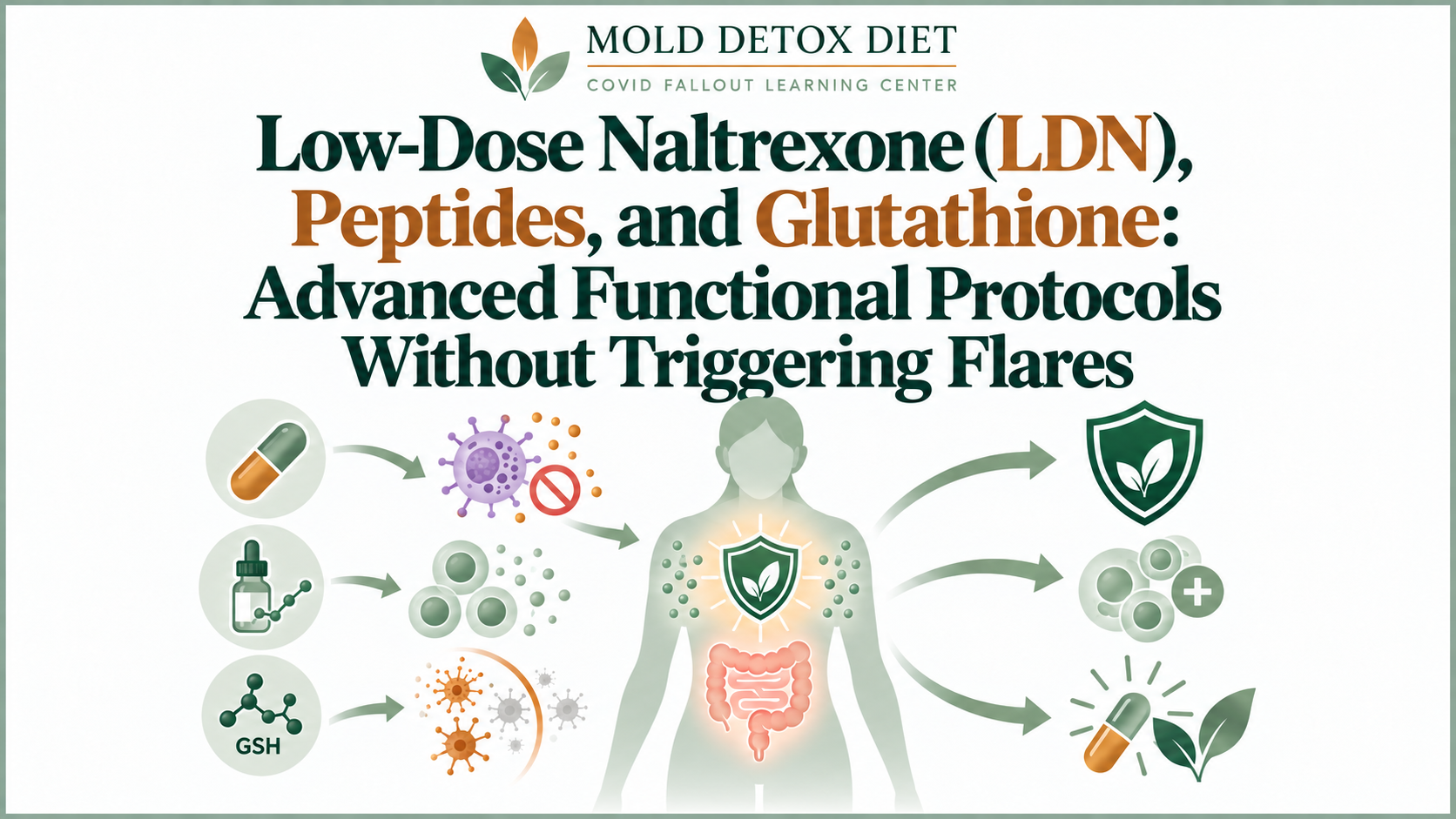
Low-Dose Naltrexone (LDN), Peptides, and Glutathione: Advanced Functional Protocols Without Triggering Flares
By Dr. Margaret Christensen and Dr. Gail Clayton
This article presents the clinical perspectives and educational approaches discussed by Dr. Margaret Christensen and Dr. Gail Clayton during their COVID Fallout Summit and follow-up Q&A sessions.
When foundational lifestyle changes and basic vitamins are not enough to break a severe post-COVID plateau, functional medicine clinicians turn to advanced therapeutic options: Low-Dose Naltrexone (LDN), peptides, and Glutathione.
However, managing these potent tools requires skill. In their clinical Q&A sessions, Dr. Margaret Christensen and Dr. Gail Clayton address critical patient questions regarding why certain therapies trigger flares in sensitive individuals and how to sequence them safely.
Low-Dose Naltrexone (LDN): Microglial Damping and Autoimmune Control
Full-dose Naltrexone (50 mg) is traditionally used to block opioid receptors. However, when used at micro-doses (0.5 mg to 4.5 mg daily), LDN exhibits unique immunomodulatory properties:
Damping Microglial Activation: LDN briefly blocks Toll-Like Receptor 4 (TLR4) on brain microglial cells, signaling them to shut down inflammatory cytokine production (TNF-alpha, IL-6).
Boosting Endogenous Endorphins: The temporary opioid blockade triggers a rebound surge in natural endorphins, reducing chronic neuropathic pain and calming autoimmune activity.
Autoantibody Suppression: LDN helps suppress autoantibodies (such as anti-GAD65) involved in post-vaccine neuropathies and stiff-person phenomena.
Why Do Some Patients Lose Tolerance to LDN After Long-Term Use?
In Q&A discussions, patients report taking LDN successfully for a year before suddenly developing intolerance. Clinicians explain that new supplement additions (such as strong polyphenols like Resveratrol or Pterostilbene), evolving mast cell activation, or shifts in gut dysbiosis can alter hepatic clearance, requiring a temporary dose reduction.
Targeted Peptide Therapies for Tissue and Mast Cell Recovery
Peptides are short chains of amino acids that act as precise cellular signaling molecules. In post-COVID recovery, clinicians highlight three key peptides:
BPC-157 (Body Protection Compound): Promotes rapid microvascular healing, repairs leaky gut linings, and accelerates tendon and ligament recovery.
KPV (Lysine-Proline-Valine): A potent anti-inflammatory peptide that stabilizes mast cells, reduces intestinal mucosal inflammation, and calms histamine flares.
Thymosin Alpha-1 (TA1): Modulates T-cell function, restoring balanced immune surveillance without over-stimulating autoimmune activity.
Clinicians note that peptides are particularly valuable during acute mast cell crises when oral vitamins trigger digestive reactions.
Glutathione Precautions: Preventing Detox Flares in MCAS
Glutathione is the body's master antioxidant, vital for liver detoxification and binding heavy metals. However, Dr. Christensen and Dr. Clayton emphasize a vital safety warning:
In patients with severe Mast Cell Activation Syndrome (MCAS), pushing high-dose Glutathione too fast can trigger severe inflammatory dumping flares.
If a patient suffers from daily hives, dumping diarrhea, and extreme chemical sensitivity, Glutathione mobilizes stored toxins faster than the liver and gut can excrete them. Sensitive patients must stabilize mast cell membranes with H1/H2 blockers and Quercetin before introducing Glutathione.
Practitioner Protocol on Fullscript
These supplement collections are curated educational resources. Purchases made through our Fullscript dispensary may provide compensation to our practice. Supplements are not substitutes for individualized medical care.
Collagen Peptides vs. Free-Form Amino Acids
Patients often ask whether taking off-the-shelf collagen powder provides peptide therapy. Clinicians clarify that commercial collagen digests into free-form amino acids (primarily glycine, proline, and hydroxyproline) rather than signaling peptides.
To prevent "cytokine amino acid steal"—where chronic inflammation breaks down muscle tissue for immune energy—clinicians recommend free-form amino acid blends (such as Amino Replete) on an empty stomach. High-dose free-form amino acids (10g twice daily) temporarily activate mTOR to rebuild lost muscle mass and restore exercise stamina without fueling inflammatory flares.
Summary and Next Steps
LDN, peptides (BPC-157, KPV), and free-form amino acids offer powerful support for neuroinflammation, mast cell stabilization, and muscle recovery. However, in sensitive MCAS patients, high-dose Glutathione must be delayed until mast cells are stabilized to prevent detox flares.
Frequently Asked Patient Questions
1. How does Low-Dose Naltrexone (LDN) reduce post-COVID pain and neuroinflammation?
LDN blocks Toll-Like Receptor 4 (TLR4) on brain microglial cells, turning off the brain's internal inflammatory alarm while triggering a natural endorphin surge that reduces neuropathic pain.
2. Why did I suddenly develop an intolerance to LDN after taking it successfully for over a year?
Sudden LDN intolerance is often triggered by shifts in mast cell reactivity, changes in liver detox pathways, or new interactions with potent polyphenols (such as Resveratrol). Temporarily lowering your dose or addressing gut dysbiosis usually restores tolerance.
3. Does commercial collagen powder act like therapeutic peptide therapy?
No. Commercial collagen breaks down into basic free-form amino acids (mainly glycine) during digestion. While helpful for skin and joint support, it does not provide the targeted cellular signaling of therapeutic peptides like BPC-157 or KPV.
Source Materials & References:
Dr. Margaret Christensen & Dr. Gail Clayton, COVID Fallout Summit & Educational Q&A Transcripts.
Front Line COVID-19 Critical Care Alliance (FLCCC) Advanced Therapeutics Protocols.
OvationLab Peptide & Immunomodulation Clinical Notes.
More in Hormones, Gut Restoration & Targeted Functional Therapies
Go Deeper
Mold, Mast Cells, & Autoimmunity — our in-depth course on immune modulation, mast cells, and biotoxin illness mechanisms.
Explore all of our educational courses
Mentored Healing — enrollment opening soon. Join the waitlist for guided education and community support.
The information in COVID Fallout Resources is for educational purposes only and is not intended as medical advice. Please consult a qualified healthcare provider about your individual situation before starting, stopping, or changing any supplement, medication, or protocol.