Niacinamide (Vitamin B3) and NAD+ Depletion: The Essential Nutrient for Cellular Energy and Fatigue
By Dr. Margaret Christensen and Dr. Gail Clayton
This article presents the clinical perspectives and educational approaches discussed by Dr. Margaret Christensen and Dr. Gail Clayton during their COVID Fallout Summit and follow-up Q&A sessions.
If you were asked to pick just one foundational nutrient to combat post-COVID fatigue, rapid heart rate, and brain fog, what would it be? In their educational protocols, Dr. Margaret Christensen and Dr. Gail Clayton frequently highlight Niacinamide (Vitamin B3) as their premier nutrient choice for cellular energy recovery.
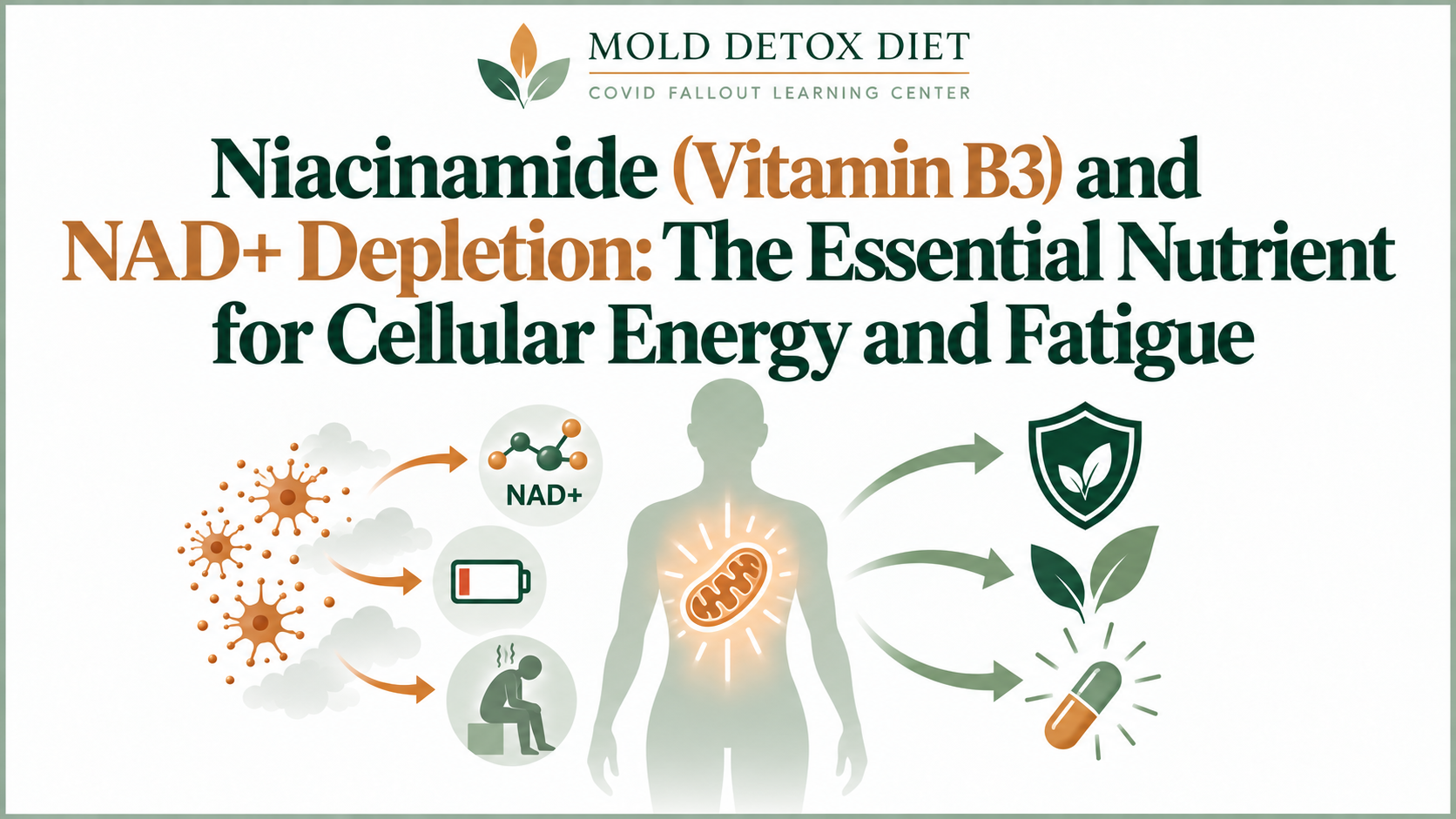
Understanding why Niacinamide is so effective requires examining how the SARS-CoV-2 virus depletes your body's primary energy currency: NAD+ (Nicotinamide Adenine Dinucleotide).
SARS-CoV-2 and the NAD+ Energy Crash
Every cell in your body relies on NAD+ to generate ATP energy in the mitochondria, repair damaged DNA, and control inflammatory gene expression. When SARS-CoV-2 infects cells, it activates an enzyme called PARP-1 (Poly-ADP-ribose polymerase) to repair viral DNA damage.
This massive PARP-1 activation rapidly consumes intracellular NAD+ stores, causing a severe cellular energy crash. Depleted NAD+ levels lead to classic post-viral symptoms:
Profound Muscle Exhaustion: Neurons and muscle cells cannot generate sufficient ATP, causing limbs to feel like lead.
Rapid Heart Rate & Tachycardia: Depleted cardiac tissue struggles to regulate rhythm, leading to sudden pulse spikes.
Pellagra-Like Skin Symptoms: Severe NAD+ depletion resembles mild pellagra (B3 deficiency), manifesting as dry, deeply cracked lips, red mouth borders, skin sensitivity, and gastrointestinal distress.
Taming the Cytokine Storm and Supporting Blood Vessels
Beyond restoring ATP, Niacinamide plays a critical role in controlling hyper-inflammation. Niacinamide acts as a natural inhibitor of nuclear factor kappa B (NF-kB)—the master switch that drives cytokine storms, Interleukin-6 (IL-6), and vascular inflammation.
By inhibiting NF-kB, Niacinamide helps cool down inflamed blood vessel linings, reduce respiratory tissue swelling, and calm sympathetic heart rate spikes.
Addressing Flushing and Choosing the Right Form of B3
A frequent source of confusion among patients is why certain forms of Vitamin B3 cause intense skin flushing while others do not:
Niacin (Nicotinic Acid): Causes a rapid release of prostaglandin in the skin, leading to intense, temporary red flushing, heat, and itching.
Niacinamide (Nicotinamide): Provides the direct precursor for NAD+ synthesis without causing skin flushing in most individuals.
Nicotinamide Riboside (Niagen / Nadovim): An advanced form of B3 that boosts NAD+ through a separate pathway, often well-tolerated by sensitive patients.
Why Do Some Patients Flush Even on Non-Flushing Niacinamide?
In clinical Q&A sessions, patients ask why they experience flushing or rashes even on low doses of non-flushing Niacinamide. Clinicians explain that severe histamine intolerance (MCAS), vasodilation, MTHFR gene mutations, or bottlenecks in B3 methylation pathways can cause temporary flushing reactions.
If Niacinamide causes flushing, starting with lower doses or transitioning to Nicotinamide Riboside (Niagen) can help build tolerance gradually.
Clinical Dosing and Precautions
Niacinamide is widely utilized in functional recovery protocols (often starting at 250 mg to 500 mg daily and titrating higher under clinical guidance for severe fatigue). However, patients with active liver disease or high baseline liver enzymes should monitor their blood work when using high doses over extended periods.
Practitioner Protocol on Fullscript
These supplement collections are curated educational resources. Purchases made through our Fullscript dispensary may provide compensation to our practice. Supplements are not substitutes for individualized medical care.
Summary and Next Steps
SARS-CoV-2 infection causes severe cellular NAD+ depletion, driving chronic fatigue, rapid heart rate, and pellagra-like skin symptoms. Niacinamide (Vitamin B3) restores intracellular NAD+, boosts mitochondrial ATP, and calms cytokine storms without causing the skin flushing associated with plain niacin.
Frequently Asked Patient Questions
1. Why do Dr. Christensen and Dr. Clayton consider Niacinamide their top supplement choice for COVID recovery?
Niacinamide directly replenishes intracellular NAD+ pools destroyed during viral replication. Restoring NAD+ powers up cellular mitochondria, restores ATP energy, calms rapid heart rate, and inhibits inflammatory cytokine storms.
2. What is the difference between Niacin, Niacinamide, and Nicotinamide Riboside (Niagen)?
Plain Niacin causes intense skin flushing and heat. Niacinamide provides non-flushing B3 support for NAD+ production. Nicotinamide Riboside (Niagen) is an advanced precursor that bypasses certain enzymatic bottlenecks to boost NAD+ gently.
3. Why do I get a flushing rash even when taking "non-flushing" Niacinamide?
Flushing on non-flushing forms usually indicates severe Mast Cell Activation Syndrome (MCAS), high baseline histamine, or methylation gene variations (such as MTHFR). Starting with very small doses or switching to Niagen helps avoid flushing flares.
Source Materials & References:
Dr. Suzanne K. Gazda, NAD+ Metabolism & Brain Health References.
Front Line COVID-19 Critical Care Alliance (FLCCC) Mitochondrial Support Protocols.
Dr. Margaret Christensen & Dr. Gail Clayton, COVID Fallout Summit & Educational Q&A Transcripts.
More in Hormones, Gut Restoration & Targeted Functional Therapies
Go Deeper
Mold, Mast Cells, & Autoimmunity — our in-depth course on immune modulation, mast cells, and biotoxin illness mechanisms.
Explore all of our educational courses
Mentored Healing — enrollment opening soon. Join the waitlist for guided education and community support.
The information in COVID Fallout Resources is for educational purposes only and is not intended as medical advice. Please consult a qualified healthcare provider about your individual situation before starting, stopping, or changing any supplement, medication, or protocol.